 The Duck Curve
Scottish ministers consent Muir Mhòr floating wind farm of up to 1 GW
Construction off Peterhead waits on an approved seabird compensation plan, and the turbines may not turn until a radar mitigation scheme agreed with the MOD is in place and working.
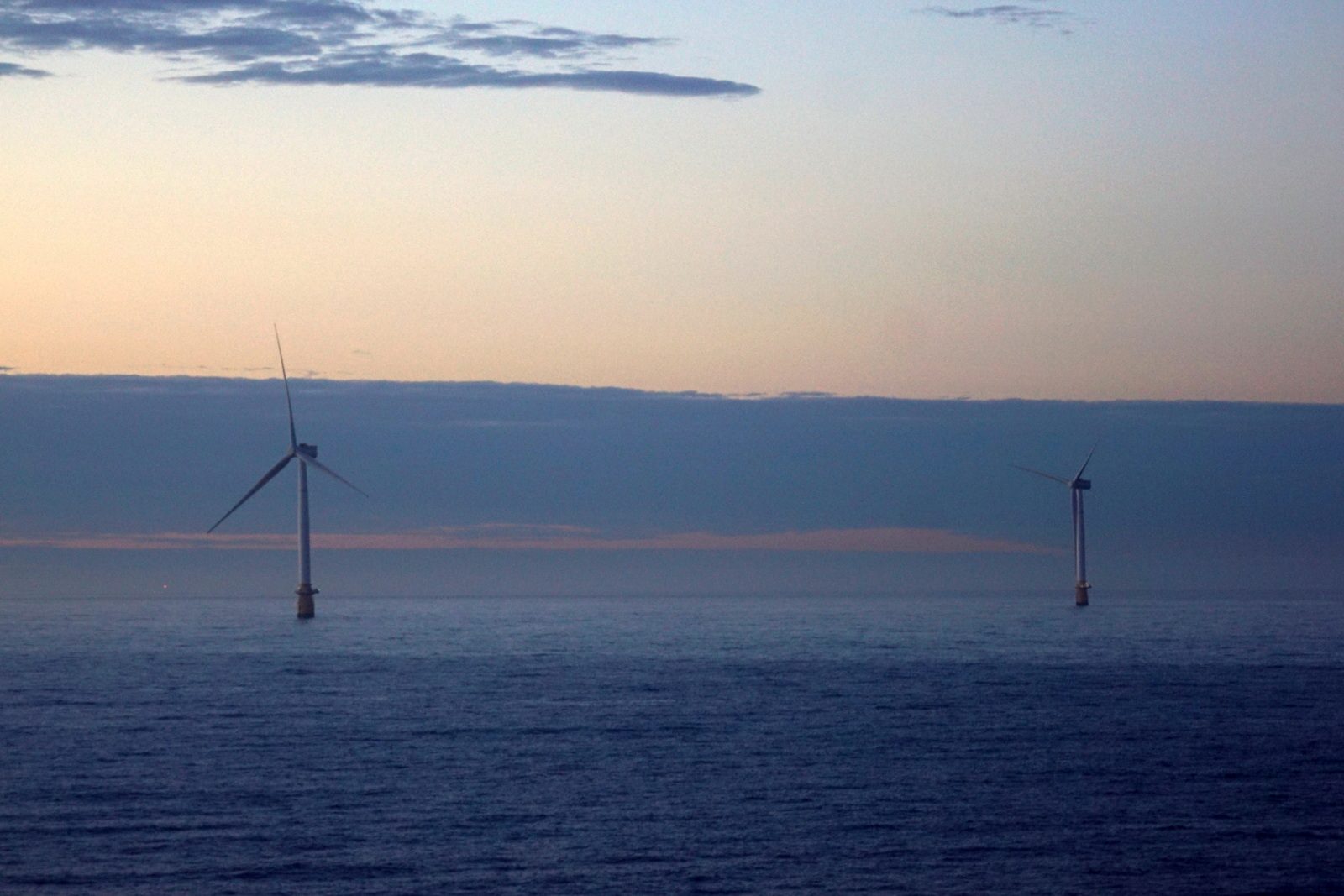
The Scottish Government granted consent on November 19, 2026 for Muir Mhòr, a floating offshore wind farm of up to 67 turbines about 63 km off the Aberdeenshire coast, with a generating capacity of up to 1 GW, it announced. The decision notice grants consent under section 36 of the Electricity Act 1989 for 35 years from final commissioning, and construction must begin within five years of the consent unless ministers direct a later period. Marine licences for the wind farm and its transmission assets were granted alongside it, according to the public notice of the decision.
Each turbine may stand up to 340 m to the blade tip with a rotor up to 300 m across, on a floating foundation held by anchors and mooring lines, within a 200 km² site east of Peterhead. Fred. Olsen Seawind agreed in April 2026 to take over Vattenfall's 50% stake, and the project's consent-day release says it now owns all of it and "remains on track to begin generating clean, renewable power in the early 2030s." The project says it has awarded £18.4 million in development contracts so far, £7.96 million of it to Scottish suppliers.
Public Service Reform Secretary Ivan McKee said the project offers "significant potential to strengthen energy security, drive down floating offshore wind costs and unlock investment and jobs." He put Scotland's offshore wind at 11 operating farms with 4.3 GW of capacity and more than 11 GW consented.
What the consent requires first
Seabirds come first. Ministers concluded that the wind farm would adversely affect the integrity of protected seabird sites: guillemots at two Special Protection Areas from the project alone, and, in combination with other projects, gannets, puffins, razorbills and kittiwakes, the last at ten Special Protection Areas. They approved it anyway under the Habitats Regulations derogation, finding no alternative solutions and imperative reasons of overriding public interest. The compensation on offer is a proposed Seabird Recovery Partnership with the National Trust for Scotland and the Caledonia offshore wind farm on islands the trust manages, plus a measure to reduce human disturbance of seabirds around the Firth of Forth. Ministers said those measures have the potential to deliver the compensation required but need more detail to show they are sufficient, so construction cannot begin until they approve a detailed seabird compensation plan, and their stated expectation is that the measures are in place and delivering before then.
Radar comes next. The Ministry of Defence objected in February 2025 that the turbines would degrade the air defence radar at Remote Radar Head Buchan, and the ministerial submission recommending consent records that the MOD, the RSPB and the Scottish Fishermen's Federation all maintained their objections through formal consultation. The condition that answers the MOD is precise about the order of events. No turbine may be erected until ministers confirm that a radar mitigation scheme has been formally agreed with the MOD, and no erected turbine may turn its rotor, outside approved testing, until the scheme's required measures are in place and its performance criteria met. The turbines can go up before the radar fix works; they cannot spin until it does. Ministers understand the fix is meant to come through what the notice calls Project Njord.
Fishing is where officials concede some impacts will stay significant. The developer's own assessment found a moderate adverse effect, significant in assessment terms, on UK demersal otter trawl and pelagic otter trawl and purse seine fleets during operation, and the government's marine scientists told officials they knew of no further mitigation that could reduce or offset the commercial fisheries impacts. The consent requires an obstacle-free zone of no less than 6.5% of the array area, 13 km², with no turbines, substation platforms, moorings, anchors or cables allowed inside it, and lets ministers require the developer's fisheries fund to run beyond construction and the first five years of operation unless monitoring shows that is unnecessary.
Consent is not a contract
What the project does not have is a price. In April the developer said Muir Mhòr was "targeting an early allocation round", meaning the UK's Contracts for Difference auctions, and the consent-day release does not say whether it has entered one. The government's budget notice for the current round, Allocation Round 8, landed the same day as the consent. It sets "notional initial budgets of £1" for the solar, onshore wind, offshore wind and floating offshore wind pots, "meaning no projects will clear under the initial budget and all bids will be viewed anonymously." The notice adds: "Budget will only be provided if bid prices are in consumers' interests." The round opened to applications on July 20, 2026.
The last round shows how small floating wind still is in that auction. Allocation Round 7 contracted 192.5 MW of floating offshore wind across two projects, Erebus (100 MW, Wales) and Pentland (92.5 MW, Scotland), at a strike price of £216.49/MWh in 2024 prices. The one project in Round 7's separate Scottish offshore wind category, Berwick Bank Phase B (1,380 MW), won at £89.49/MWh. At up to 1 GW, Muir Mhòr alone is more than five times that floating total, by our arithmetic. Public money for floating wind elsewhere has come in other forms: Norway's Enova will put NOK 3.94 billion into two planned floating projects off Karmøy, each of which plans two 18.5 MW turbines, with the money paid out only if the projects are carried out, and the UK's offshore wind compact with Japan, centered on floating and deepwater technology, names no budget.
Scotland is aiming for up to 40 GW of offshore wind by 2035-2040, under the policy statement it updated on January 28, 2026, which the decision notice cites, against the 4.3 GW McKee says is operating now. The notice adds that the government's Offshore Wind Focus strategy (2024) outlines the importance of the ScotWind and INTOG leasing rounds, "in particular in the development of floating offshore wind technologies." Muir Mhòr won its seabed rights in the 2022 ScotWind leasing round.
The economic case in the decision notice comes from the developer's environmental report, which estimated £491 million of UK gross value added from construction, £155 million of it in Scotland, and 1,570 jobs at peak construction, 570 of them potentially in Scotland. Those figures, like the project, assume it gets built.
Sources
Primary
- Decision notice for the section 36 consent for the construction and operation of Muir Mhòr Offshore Wind Farm · Scottish Government, Marine Directorate Licensing Operations Team
Supporting
- Contracts for Difference Allocation Round 7 results (accessible webpage) · Department for Energy Security and Net Zero
- Fred. Olsen Seawind assumes 100% ownership of Muir Mhòr Floating Offshore Wind Farm project · Muir Mhòr Offshore Wind Farm
- Ministerial submission: application under section 36 to construct and operate Muir Mhòr Offshore Wind Farm · Scottish Government, Marine Directorate Licensing Operations Team
- Notice of EIA consent and regulatory decision: Muir Mhòr Wind Farm Limited · Scottish Government, Marine Directorate
- Major milestone for offshore wind ambition · Scottish Government
- Muir Mhòr Floating Offshore Wind Farm gets green light from ministers · Muir Mhòr Offshore Wind Farm
- Contract Budget Notice for Allocation Round 8, 2026 · Department for Energy Security and Net Zero
Copies of cited sources are retained where available. If a link no longer resolves, request a copy at contact@theduckcurve.com.