 The Duck Curve
Revolution Wind reaches full operation as Ørsted books US impairments
The 704 MW project Interior ordered halted twice in 2025 was fully commissioned in October; DKK 3.4 billion of US write-downs, blamed on interest rates, left Ørsted's third quarter at a DKK 0.7 billion loss.
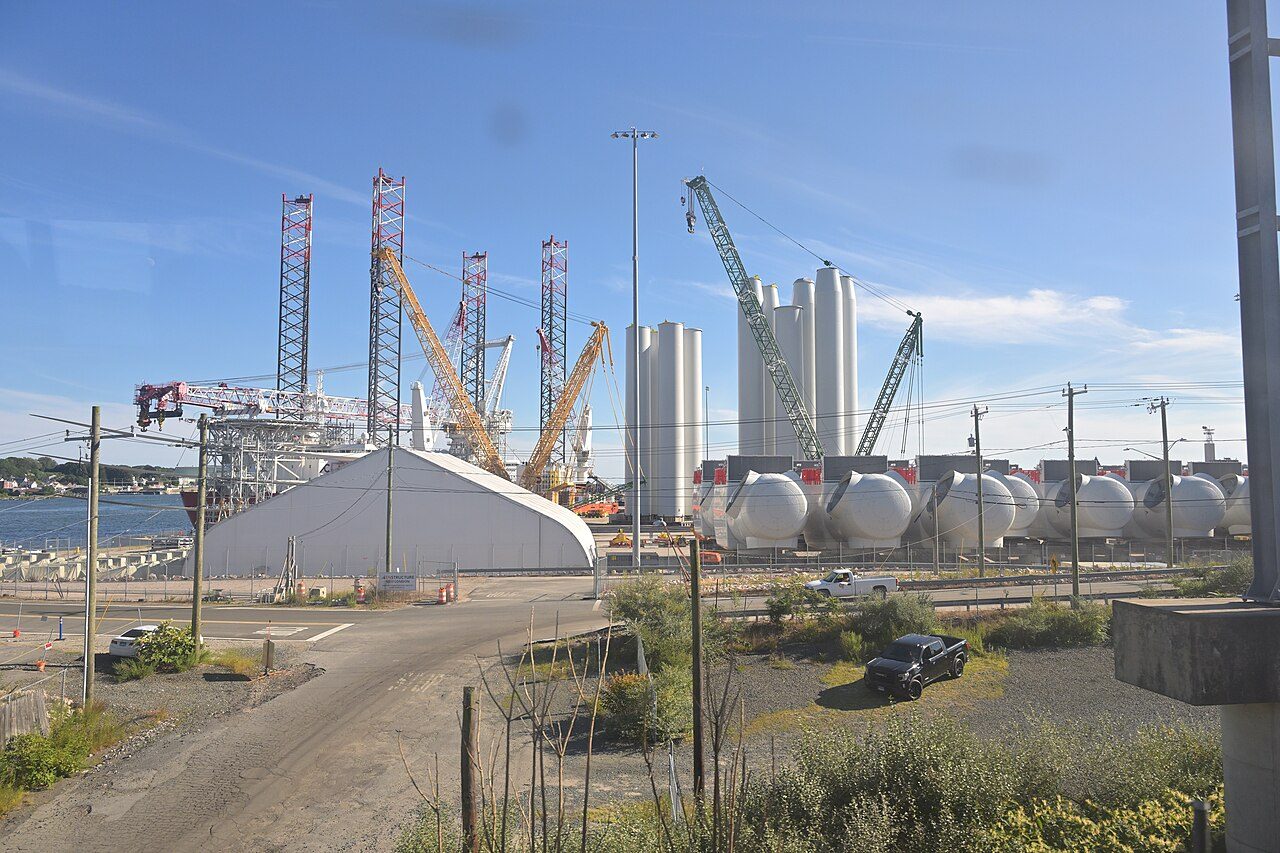
Revolution Wind, the 704 MW offshore wind farm off Rhode Island that the Interior Department ordered to halt twice in 2025, was fully commissioned in October 2026, Ørsted said in its interim results for the first nine months of 2026 on November 5. The project is now delivering power under its offtake contracts with utilities in Rhode Island and Connecticut. The same report put Ørsted's third quarter at a loss of DKK 0.7 billion, after DKK 3.4 billion of non-cash impairments on its US projects, which the company blames on higher long-dated US interest rates.
Operationally, the nine months were strong. EBITDA excluding new partnerships and cancellation fees grew 19% to DKK 20.2 billion, from DKK 17.0 billion, which Ørsted puts down mainly to higher wind speeds, higher prices and ramp-up generation from new offshore wind farms, and it kept its full-year guidance of above DKK 28 billion. The quarterly loss is also smaller than the DKK 1.7 billion it lost in the third quarter of 2025. Ørsted's headline pairs Revolution Wind with Borkum Riffgrund 3, the 913 MW German project that Ørsted announced was in commercial operation on August 31. The American milestone, at a project Interior twice ordered halted, arrives as a few lines in an earnings report.
Two federal orders, one schedule kept
The project is a 50/50 joint venture of Ørsted and Global Infrastructure Partners' Skyborn Renewables, and it has 20-year power purchase agreements for 400 MW to Rhode Island and 304 MW to Connecticut. On August 22, 2025, the Bureau of Ocean Energy Management ordered it to halt activities, according to BOEM's project page. Ørsted said in announcing the order the project was 80% complete, with all offshore foundations and 45 of 65 turbines installed, and that it aimed to keep going "towards COD in the second half of 2026." A federal court in Washington granted a preliminary injunction on September 22, 2025, allowing work to resume.
The second order came on December 22, 2025, suspending all activities for 90 days "for reasons of national security," per BOEM. By then the project said it was about 87% complete, with 58 of 65 turbines up, and had been expected to begin generating power as soon as January 2026. The same court enjoined that order on January 12, 2026, first power reached New England's grid on March 13, and full commissioning landed in October, inside the window Ørsted named when the first order arrived.
The paperwork is less settled than the turbines. On October 9, 2026, in a lawsuit challenging the project's federal approvals, Interior told Judge Royce C. Lamberth that its finding under the offshore leasing law "warrants re-evaluation" and asked him to send BOEM's approval of the project's construction and operations plan back to the agency, as our coverage of the government's remand requests reported. The same memorandum, defending the Army Corps of Engineers' permit, tells the court that "the construction is complete." The joint venture is fighting the request. In an October 26 motion, Revolution Wind calls the government's cross-motion "untimely," says it was filed 15 days late and without the court's leave while the government's own request for more time (Dkt. 113) is still pending, and asks to file its response by December 1, 2026. It also tells the court it has invested approximately $6 billion in the project. That motion is the latest entry on the docket, and the court has ruled neither on it nor on the remand request.
The write-down came from the bond market
Long-dated US interest rates rose between December 31, 2025 and September 30, 2026, lifting Ørsted's discount rates by approximately 125 basis points across its US portfolio, according to its full interim report. The projects themselves "continue to progress according to plan and remain on budget," it says. Of the DKK 3.4 billion in third-quarter impairments, DKK 2.2 billion falls on Sunrise Wind, which is still under construction, and DKK 685 million on Revolution Wind, which has now taken DKK 1.2 billion in impairments over the nine months.
In 2025 the bill came from Washington: Ørsted's nine-month impairments that year included DKK 0.5 billion for the order to stop activities at Revolution Wind. In 2026 the interest rate has cost the same project more than twice that, by our arithmetic.
Tax credits are the softer assumption. Ørsted's impairment tests assume its US projects qualify for 10% investment tax credit bonus credits, weighted at a 95% probability for Revolution Wind and Sunrise Wind, and it says qualification and monetisation "remain uncertain." Without those bonus credits, the Revolution Wind impairment would have been DKK 1.4 billion higher, the report says, and its sensitivity table puts the Sunrise Wind figure at DKK 5.2 billion. Tariffs, by contrast, have not caused further impairments in the first nine months of 2026 against the assumptions Ørsted used at the end of 2025. The October proclamation on wind turbine imports imposed no tariff and directed negotiations with trading partners through April 2027, the report notes, as we reported when it was signed.
Outlook
Sunrise Wind is still under construction, and the report says it is on track to start commissioning its turbines around the end of 2026 and reach full commissioning in the second half of 2027. Its sensitivity to rates is larger than Revolution Wind's: a 50-basis-point rise in the discount rate would have added DKK 1.3 billion to its impairment, against DKK 0.4 billion for Revolution Wind. If US long rates keep rising, or the bonus credits fall away, the bigger write-downs would land on that project. Ørsted also warns that changes in the US regulatory environment could potentially lead it to cease development, with further impairments and costs. For Revolution Wind, the court's handling of the remand request is the next marker, and it runs through briefing before any ruling. If the court grants the government's pending extension, the plaintiffs respond by December 1, 2026, the government replies by February 3, 2027 and Revolution Wind by February 24, 2027, under the schedule the October 26 motion describes; the joint venture wants its own response in on December 1. The government's motion and memorandum do not say whether the approval should stay in force while Interior reconsiders it. Ørsted's report does not mention the request, though the joint venture's own court filing contests it.
⚠ The Outlook extrapolates from Ørsted's interim report for the first nine months of 2026 (Sunrise Wind's commissioning schedule, its impairment sensitivities to discount rates and ITC bonus credits, and its warning on US regulatory changes) and from the October 9, 2026 federal filings in Green Oceans v. Interior, Revolution Wind LLC's October 26, 2026 motion to amend the briefing schedule (including the government's pending proposed schedule it describes), and the case docket.
Sources
Primary
Supporting
- Revolution Wind receives offshore stop-work order from US Department of the Interior's Bureau of Ocean Energy Management · Ørsted
- Court issues preliminary injunction allowing Revolution Wind impacted construction to resume · Revolution Wind (Ørsted / Skyborn)
- Revolution Wind LLC to File Preliminary Injunction Against Lease Suspension Order · Revolution Wind (Ørsted / Skyborn)
- US federal court grants preliminary injunction allowing Revolution Wind construction to resume · Revolution Wind (Ørsted / Skyborn)
- Revolution Wind Begins Delivering Power to New England · Revolution Wind (Ørsted / Skyborn)
- Borkum Riffgrund 3 enters commercial operation, strengthening Germany's energy security with home-grown renewable power · Ørsted
- Memorandum in Support of Federal Defendants' Cross-Motion for Summary Judgment, ECF 115 (D.D.C. 1:24-cv-00141) · U.S. District Court for the District of Columbia (via CourtListener RECAP)
- Defendant-Intervenor Revolution Wind, LLC's Unopposed Motion to Amend the Briefing Schedule, ECF 116 (D.D.C. 1:24-cv-00141) · U.S. District Court for the District of Columbia (via CourtListener RECAP)
- Interim financial report, first nine months 2026 · Ørsted
- Revolution Wind · Bureau of Ocean Energy Management
- Docket, Green Oceans v. U.S. Department of the Interior, No. 1:24-cv-00141 (D.D.C.) · CourtListener (RECAP docket of the U.S. District Court for the District of Columbia)
Copies of cited sources are retained where available. If a link no longer resolves, request a copy at contact@theduckcurve.com.