 The Duck Curve
NYPA qualifies 10 developers for its 1 GW upstate nuclear project
Six may pursue large reactors or SMRs and four SMRs only; NYPA's next pick is a host community, technology and partner, and it has told regulators it expects to seek federal nuclear loan financing.
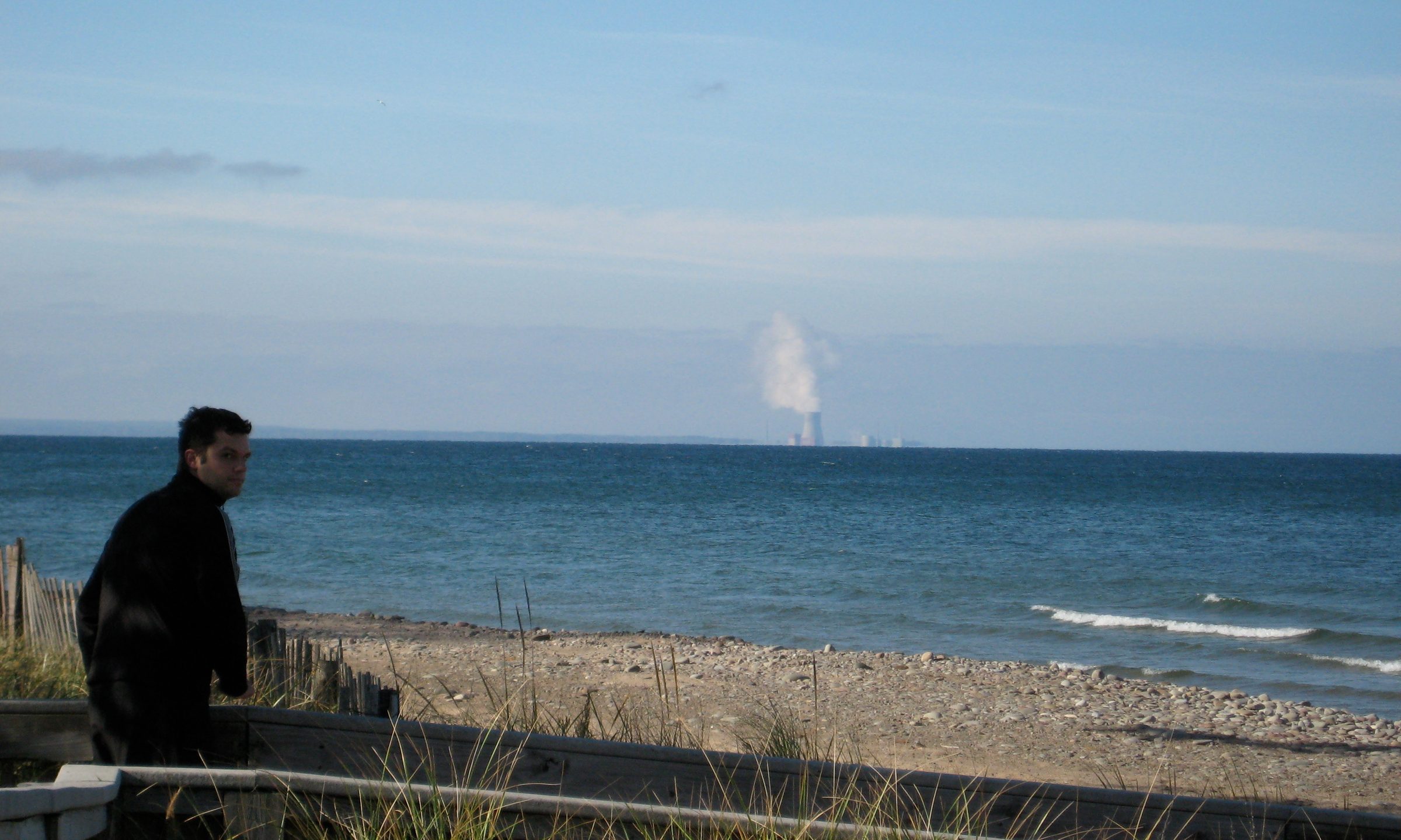
The New York Power Authority has qualified 10 nuclear developers as potential partners for its plan to build at least 1 GW of advanced nuclear capacity in upstate New York, the state power authority said on November 12, 2026. Six advance on both of its technology pathways, large-scale reactors and small modular reactors: Avangrid, Elementl Power, NextEra Energy, Oppenheimer Energy, The Nuclear Company and Turquoise Power. Four advance on the SMR pathway only: Blue Energy, Holtec International, TerraPower and X-energy.
The request for qualifications drew 21 responses, so fewer than half made the cut. Qualifying is an invitation, not a contract. NYPA says the ten demonstrated the technical expertise or project-delivery experience a nuclear project needs, and they will be invited to later solicitations for its nuclear initiative "as opportunities arise." The bigger decision comes next, without a date: NYPA is targeting the selection of a host community, a technology and a development partner "in the coming months."
Governor Kathy Hochul directed NYPA on June 23, 2025 to develop at least one nuclear plant of at least 1 GW, alone or with private partners, according to the Public Service Commission's June 11, 2026 order opening a statewide nuclear proceeding. NYPA's two 2025 requests for information drew interest from more than 30 entities, including 23 developers that wanted to partner and eight communities that wanted to host a plant. The qualification round, which NYPA announced on June 1, 2026 alongside $40 million in nuclear workforce training funding, asked respondents for "credible pathways to deliver at least 1 GW of advanced nuclear capacity in Upstate New York, including technology readiness, siting and permitting strategy, schedule and cost assumptions, ownership structures, and partnership models."
Several of the ten already have reactors in play elsewhere. The Nuclear Company proposed up to six AP1000s in Kentucky on October 21 (Prosperity One). Elementl said on October 26 that it had signed a letter of intent with a Korean-led consortium for a development partnership of up to $750 million (our report). And the Nuclear Regulatory Commission announced on November 9 that it had issued a construction permit for Long Mott, four X-energy Xe-100 reactors that a Dow subsidiary proposes in Texas (our report). NYPA's chief executive, Justin E. Driscoll, calls them major players in the nuclear industry and says qualifying them strengthens NYPA's ability to advance the first nuclear facility in New York in generations.
Who pays
The shortlist arrived two days after a cost warning from NYPA's own nuclear partner. NYPA and Ontario Power Generation signed a memorandum of understanding on December 19, 2025 to jointly develop advanced nuclear technology. On November 10, OPG said the first small modular reactor at its Darlington site is no longer expected to reach commercial operation in October 2030 or to come in within its C$7.7 billion estimate, a figure that included required systems and services common to all the SMRs planned for the project. OPG cites GE Vernova Hitachi's ongoing engineering for what OPG calls a first-of-a-kind SMR (our report).
NYPA expects federal money to cut its own costs. In comments filed on September 24 with the Public Service Commission, it said it expects to lower its total project costs by seeking financing through the US Department of Energy's nuclear loan guarantee program, which it describes as providing low-cost loans of up to 80% of a new advanced nuclear project's final total cost. "State financial assistance should be targeted at costs and time periods when other funding and financing are not available," it added.
The stakes run past NYPA's plant. Those comments went into Case 26-E-0335, which the commission's June order opened to consider a cost-effective pathway to 4 GW of new advanced nuclear. With NYPA's 1 GW and the state's existing 3.4 GW, the order says, that would make 8.4 GW, which together with the necessary transmission would comprise the "Nuclear Reliability Backbone." NYSERDA and Department of Public Service staff filed an advanced nuclear policy options paper the next day.
NYPA doubts that credits alone will be enough. The options paper introduces Advanced Nuclear Zero Emission Credits, which, per NYPA's comments, could provide the above-market revenue needed to make projects viable, but NYPA cautions that relying exclusively on those credits "may not sufficiently address the unique challenges faced by advanced nuclear projects" and wants support through the pre-final-investment-decision, construction and operating phases. It also warns against "vintage cliffs" or ownership restrictions that "might reward later projects but unfairly exclude pioneering efforts that have taken on the greatest development and operational risks." Early projects, NYPA says, must remain eligible for future state-supported procurements, and eligibility should not turn on ownership. By our reading, that second point also protects a project led by a public authority, like NYPA's own.
The plant will also need wires. NYPA told the commission that siting new nuclear upstate, including at locations upstream of existing bottlenecks, makes additional bulk transmission critical for delivering the power to downstate consumers. It recommended using the public policy transmission planning process to decide whether reaching nuclear generation should be designated a public policy transmission need, or the Priority Transmission Projects process if the need is more time-sensitive.
State staff's recommendations on who pays are now due November 18. The commission's order told department staff to file a white paper with recommendations, covering how the options would support the funding, sequencing and management of the backbone's risks and costs, by November 13, 2026; staff asked for more time, and the commission's secretary extended the deadline. NYPA told the commission its project is distinct from the broader backbone and progressing on its own timeline, and offered to share what it learns on technology selection, site selection, ownership structure and financial terms. A state Master Plan for Responsible Advanced Nuclear Development is expected to be published by the end of 2026, per NYPA's June release; our advanced reactor tracker follows the national picture.
Sources
Primary
- New York Power Authority Announces Significant Step in Effort to Deliver at Least 1 GW of Advanced Nuclear Energy in Upstate New York · New York Power Authority
Supporting
- Governor Hochul Announces Significant Steps in Development of at Least 1 GW of Nuclear Energy in Upstate New York · New York Power Authority
- Case 26-E-0335, Order Establishing a Nuclear Reliability Backbone Process · New York State Public Service Commission
- Comments of the New York Power Authority, Case 26-E-0335 · New York Power Authority (filed with the New York State Public Service Commission)
- Case 26-E-0335, Ruling on Extension Request · New York State Public Service Commission
- OPG Reports 2026 Third Quarter Financial Results · Ontario Power Generation (via Cision Canada / CNW)
Copies of cited sources are retained where available. If a link no longer resolves, request a copy at contact@theduckcurve.com.