 The Duck Curve
NRC final rule puts contested hearings on three tracks with fixed clocks
Schedules are designed to finish most contested licensing cases in about a year and the simplest in about six months; commercial reactor applications with no design-finality approval take the slowest track.
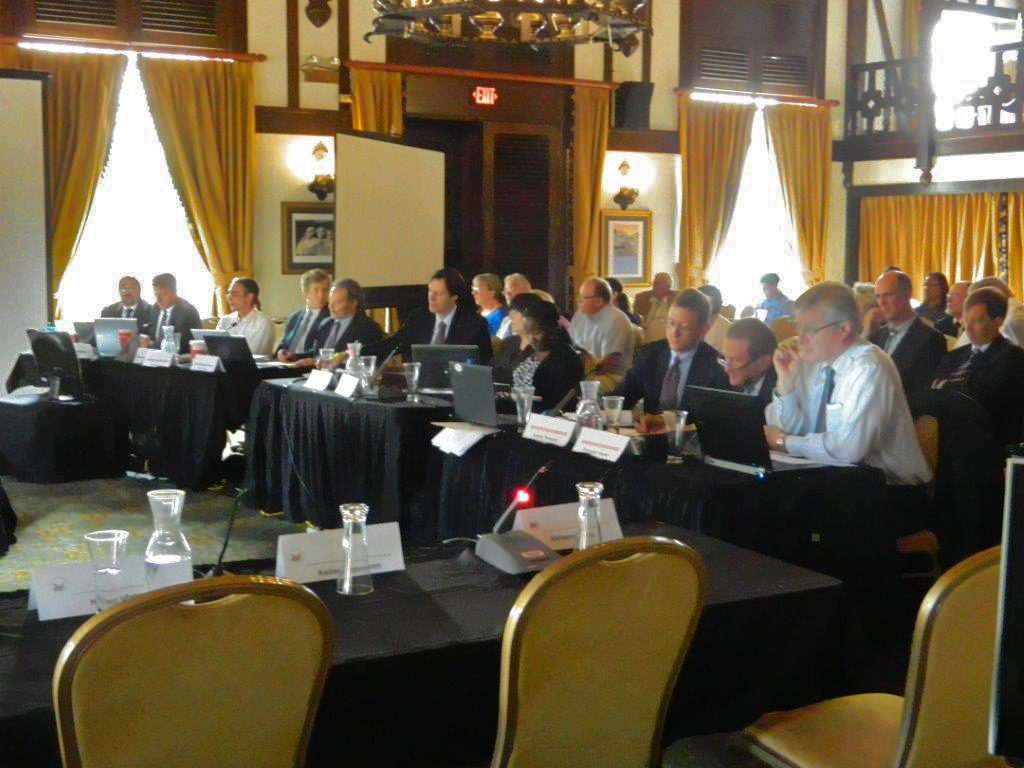
The Nuclear Regulatory Commission has put contested licensing hearings on fixed clocks, sorted into three tracks (Standard, Focused and Expedited) by how complex the application is. The schedules are designed to finish most cases in about a year and the simplest in roughly six months, the NRC said on October 30, 2026, adding that previous hearings "often took years to complete." The final rule is scheduled for Federal Register publication on November 3. It takes effect 30 days after publication, which by our count is December 3, and applies to contested proceedings noticed on or after that date.
The deadlines are the point. Executive Order 14300 gives the NRC no more than 18 months to decide on an application for a new reactor and no more than one year for an application to keep an existing one running, and the 2024 ADVANCE Act requires "efficient and timely" proceedings for a broad category of licensing actions. The NRC's existing hearing rules, the preamble says, carry model milestones "that would collectively exceed the timeframes specified in E.O. 14300," and those milestones, which are not binding, "are sometimes exceeded in practice." The new initial-decision deadlines may be extended only "if extraordinary circumstances necessitate a delay."
Which cases go on which track
The Standard track takes the cases the NRC considers most complex: construction permits, operating licenses and combined licenses for commercial reactors whose applications do not reference an NRC approval that settles design questions in the hearing (a design certification or manufacturing license, for example). It also covers new uranium enrichment plants, uranium recovery facilities, fuel facilities under subpart H of Part 70 and new low-level waste disposal sites. Its schedules allow for two non-overlapping evidentiary hearings within 13.5 months and Commission review of appeals within 18 months.
The Focused track is the default, which makes it the widest: with limited exceptions, it takes every other licensing proceeding, from reactor license renewals and license amendments to new reactor licenses that reference a design certification or manufacturing license. Early site permits and non-power production or utilization facility licenses go here too. Its schedules allow for two non-overlapping hearings within 12 months. After comments, the final rule added three entries: a later implementation of a reactor design "after the initial implementation has been designed, constructed, and operated," an enrichment plant using technology "that has been licensed and operated," and limited work authorizations.
The Expedited track is narrow, built mostly around amendments the NRC already reviews in six to nine months: measurement uncertainty recapture and stretch power uprates, amendments adopting a Technical Specifications Task Force traveler through the Consolidated Line-Item Improvement Process, and applications that reference both a categorical exclusion and a design-finality approval. Those schedules support finishing hearings around 5 to 5.5 months after the Federal Register notice of the hearing opportunity.
So the first commercial plant of an advanced design, applying without a design certification or manufacturing license, lands on the longest track by default, though the ADVANCE Act and the order both aim to speed up advanced nuclear deployment. A design reaches the Focused track through a design certification or manufacturing license, or once its first plant has been designed, built and operated. The Commission says it does not intend the designations "to be rigid" and may move an application, or a class of them, to a faster timeline. Microreactors are the case in point. The NRC agreed with a commenter that hearing schedules patterned on 18-month reviews of large reactors would not suit them, but said the term "is not precisely defined" and that defining it is outside this rulemaking. Its proposed Part 57 rule of May 1, 2026 asks whether certain Part 57 applications belong on the Expedited track.
How a hearing changes
Hearings no longer wait for the NRC staff to finish their technical review: they start "as soon as practicable" once a contested issue, or contention, is admitted, according to the agency. The presiding officer, a Licensing Board by default, must set a schedule that to the greatest extent practicable does not run past the staff's own date for completing its review. Each hearing notice will carry a "Standard Hearing Completion Date," and a contention raising a new issue after that date has to meet the NRC's standards for reopening the record. The evidentiary phase shrinks most. The existing model milestones envision about nine months for it, and in practice it has on average taken substantially longer, the NRC says; under the final rule it will generally be limited to 2 to 4.5 months, and 3.5 to 4.5 months for most proceedings. Discovery obligations are also cut back.
The NRC says the rule does not change the standards applicants must meet for a license. "This rule preserves public participation while making the hearing process more efficient," Chairman Ho K. Nieh said.
What comments changed, and what it saves
The NRC proposed the rule on March 3, 2026, took comments until April 2 and received 33 unique comment submissions. One change runs against the headline. The final rule drops a proposed requirement that litigants put more information on the merits of their contentions into their initial filings, along with a proposal to take up standing earlier. Without the front-loaded filings, every track got more time than proposed. For reactor and other non-enrichment cases on the Standard track, the NRC "modestly" lengthened the evidentiary hearing schedules, adopting the 135-day initial-decision deadline it built around uranium enrichment hearings; Expedited deadlines grew by 20 days and Focused ones by 10.
The NRC's regulatory analysis counts the rule as deregulatory and projects cumulative undiscounted net savings of $67.4 million over 2026 through 2030. That rests on a rough estimate of 15 license proceedings a year drawing hearing requests, with requests granted in 9 and about five evidentiary hearings. Per proceeding, the agency expects NRC staff hours to fall from 4,150 to 3,025 and applicants' from 3,925 to 3,025. Petitioners, whose challenges the hearings decide, save the least: from about 1,975 hours to about 1,525, by the NRC's rough estimate.
The hearing rule follows the October 22 final rule letting reactor applicants draw on Department of Energy and Department of War test results. Both answer Executive Order 14300, whose deadline for final rules is November 23, 2026. Our advanced reactors reference page tracks where US advanced reactor projects stand.
Sources
Primary
- NRC Finalizes Contested Hearing Rule, Will Resolve Simplest Cases Within Six Months (No. 26-082) · U.S. Nuclear Regulatory Commission
- Streamlining Contested Adjudications in Licensing Proceedings (final rule, FR Doc. 2026-22443, public inspection copy) · U.S. Nuclear Regulatory Commission (Federal Register)
Copies of cited sources are retained where available. If a link no longer resolves, request a copy at contact@theduckcurve.com.