 The Duck Curve
Netherlands opens 2 GW IJmuiden Ver offshore wind tender, with subsidy
Bidders may ask for up to €117/MWh, a cap raised in June to cover a possible grid fee on producers; the government calls subsidy-free bids unlikely.
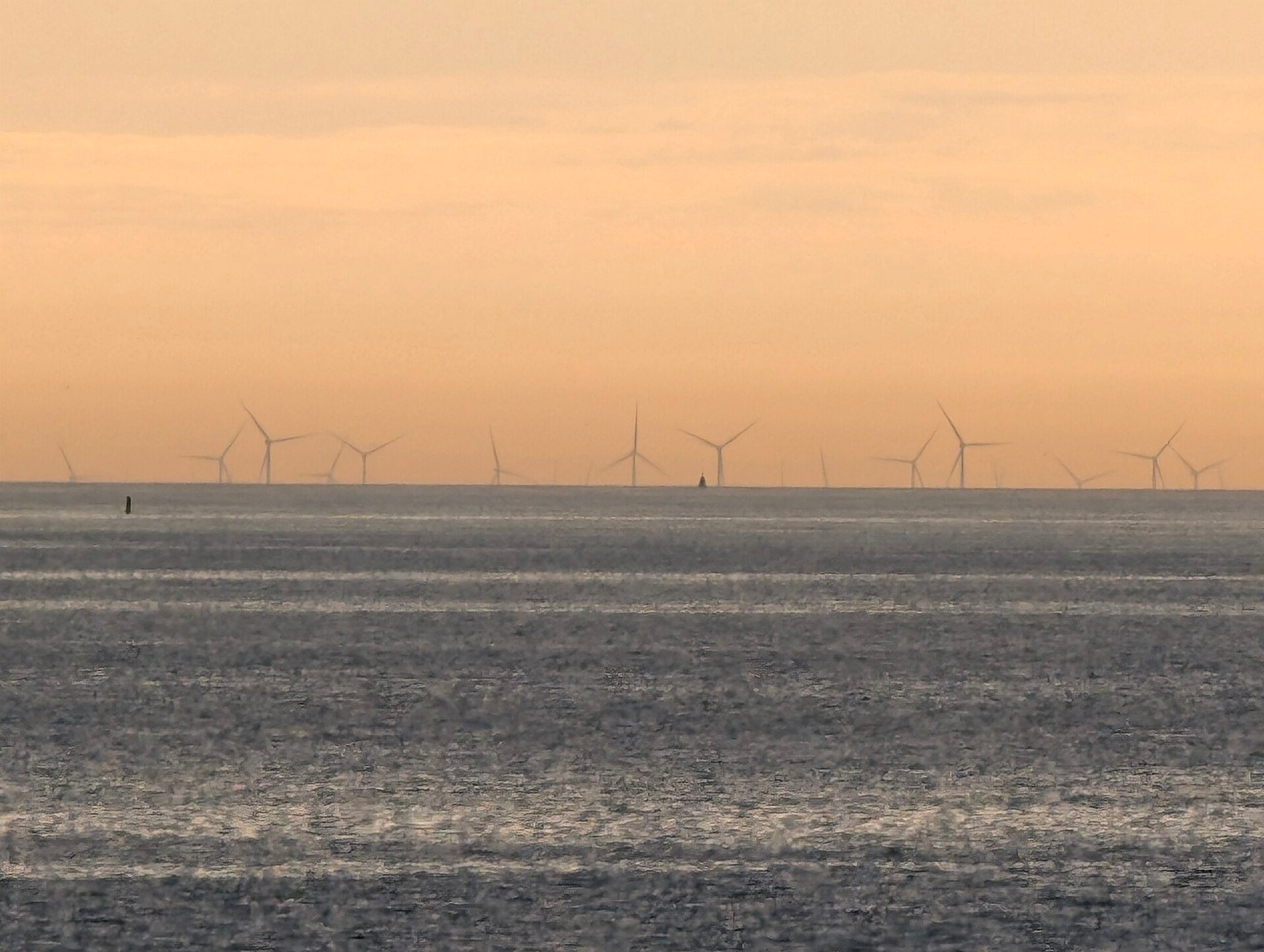
The Netherlands opened applications on November 26, 2026 for two North Sea wind farm sites, IJmuiden Ver Gamma-A and Gamma-B, each with room for about 1 GW, and this time the state is offering money. Bidders can ask for up to €4.758 billion in subsidy for Gamma-A and €4.698 billion for Gamma-B, at no more than €117/MWh and €116/MWh respectively. Applications close at 17:00 on December 10. RVO, the Netherlands Enterprise Agency, which runs the tender, expects to grant the permits in the first quarter of 2027 and both farms to begin operating in 2032.
Each site takes either a subsidy application or a subsidy-free bid, and the two procedures run side by side. RVO processes the subsidy-free auction bids first, with the highest bid ranking first, then the subsidy applications, where the lowest request ranks first. The highest-ranked application wins the permit. The European Commission, which approved the scheme on November 17 (covered here), describes the subsidy as a variable premium on top of the market price, paid if necessary for 15 years, and says the government will consider subsidy bids only if nobody offers to pay for the site.
The government doubts anyone will. Its January letter to parliament called subsidy-free bids unlikely under current market conditions, citing the Nederwiek I-A tender, which received no applications in October 2025. The auction was kept open in case market conditions improved before the tender closes.
A cap raised for a fee not yet set
The price caps went up in June. The draft rules had set them at €104/MWh for Gamma-A, the maximum the Netherlands Environmental Assessment Agency (PBL) recommended in January, and €103/MWh for Gamma-B. In a June 11 letter, the Minister of Climate Policy and Green Growth told parliament the cabinet had raised them to €117/MWh and €116/MWh.
The reason is a grid charge. The Authority for Consumers and Markets (ACM) confirmed on April 30 that it would proceed with developing a feed-in tariff, under which producers as well as customers pay for the electricity grid. The minister wrote that there was "currently no clarity regarding the design, operation and expected level of the tariff," leaving bidders to price in too much risk or too little; RVO's tender page still calls it a potential tariff. So one arm of the state has raised its subsidy ceiling to cover a charge another arm has not yet set. The winner gets no second conversation either: once the permit is granted, the letter says, there is no scope to discuss compensation when the tariff's design becomes known.
The increase adds €780 million to each site's subsidy ceiling, €1.56 billion in all. Those ceilings are maximums that would be paid out only with long-term very low electricity prices and high production. The letter expects cash spending to be significantly lower and puts the cash reservation, including a 10% price-risk buffer, at €3.159 billion for Gamma-A and €3.051 billion for Gamma-B. Of the roughly €6.21 billion reserve the two tenders now need, €1.466 billion comes from coalition agreement funds reserved for the roll-out of offshore wind up to 40 GW. If both winning bids land at the new caps, the letter says, the increase would theoretically reduce progress toward that 40 GW target by 0.6 GW.
How the tender got here, and where it sits
The tender is already a scaled-back version. The government's Offshore Wind Energy Action Plan of September 2025 announced a cut in the 2026 roll-out pace from 4 GW to 2 GW, and in January the government said only 1 GW, at Gamma-A, could be opened with a sufficient chance of success within its budget. In April 2026 it decided to open Gamma-B with subsidies as well, according to RVO.
The Netherlands has company. The January letter placed Nederwiek I-A beside failed tenders abroad, Germany's 2.5 GW subsidy-free round for the N-10.1 and N-10.2 sites in August 2025 and Denmark's 3 GW round in December 2024, and noted that several countries are turning (again) to financial support and price certainty such as contracts for difference. Belgium, whose two-way contract for difference the European Commission cleared on November 10, is one of them.
Gamma-A lies about 53 km off the Dutch west coast and covers 129 km²; Gamma-B is about 61 km out on 95 km². Both will connect to a single TenneT platform with a 2 GW direct-current link to an onshore substation. The winner of each site posts a €100 million bank guarantee or deposit, which the government claims in stages at €10 million for each month the farm is late. The tender rules also require, per the June letter, that all rotor blades be at least 70% recyclable.
Sources
Primary
- Permit for IJmuiden Ver Wind Farm Site Gamma-A · Netherlands Enterprise Agency (RVO)
Supporting
- 1 GW subsidy tender for offshore wind energy in 2026 (Letter to Parliament, English translation) · Ministry of Climate and Green Growth (via RVO)
- Letter to Parliament on the IJmuiden Ver Gamma-A and Gamma-B tenders (English translation) · Ministry of Climate Policy and Green Growth (via RVO)
- Commission approves €9.5 billion Dutch State aid to support offshore wind energy (IP/26/2457) · European Commission
- Permit for IJmuiden Ver Wind Farm Site Gamma-B · Netherlands Enterprise Agency (RVO)
Copies of cited sources are retained where available. If a link no longer resolves, request a copy at contact@theduckcurve.com.