 The Duck Curve
Minnesota PUC finds co-op's threat to disconnect Upper Sioux solar unlawful
The commission requires Minnesota Valley Cooperative Light & Power to keep serving the community as long as the project operates behind the meter and safely, and directed the Attorney General to investigate the co-op's conduct.
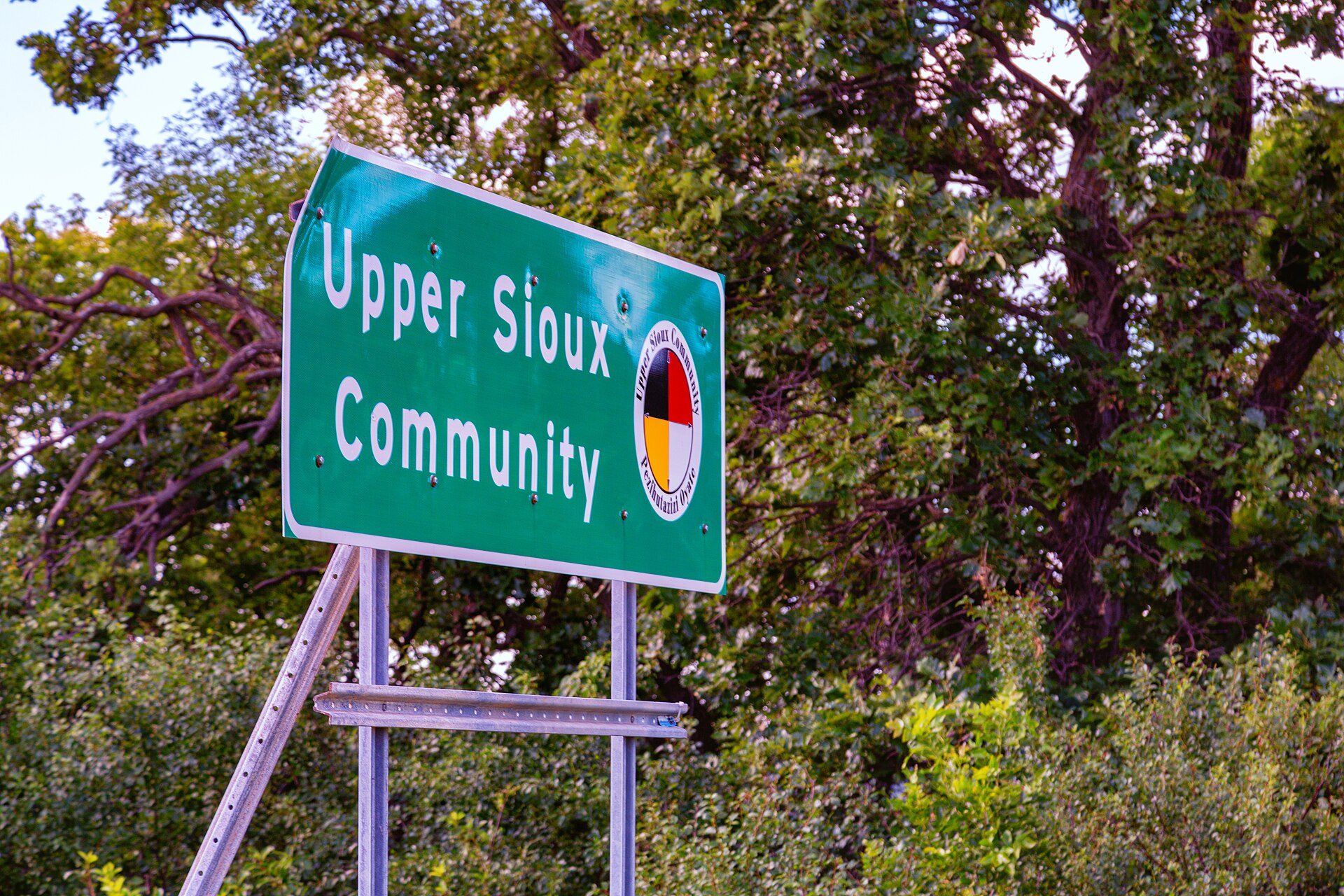
The Minnesota Public Utilities Commission determined on September 17, 2026 that Minnesota Valley Cooperative Light & Power Association "is acting unlawfully and unreasonably when it threatens to disconnect the Upper Sioux Community over its behind-the-meter solar and battery project." Per the release, the Commission's decision requires Minnesota Valley to continue serving the Upper Sioux Community as long as the project operates behind the meter and safely; the Commission directed that an independent engineering study must guide any equipment or operational recommendations for the project, and if the community follows the independent engineer's recommendations, Minnesota Valley may not disconnect service based on the existence of the project. The Commission also directed the Office of the Attorney General to investigate whether Minnesota Valley's conduct violates this or any other Commission order or applicable state law, and to take enforcement action when warranted. The record is Docket 25-219.
The release gives no system size, no dollar figure and no vote count. The West Central Tribune, reporting from the hearing on September 17, says the commissioners voted unanimously that day for a motion by Vice Chair Joseph Sullivan, that the community's array is 2.5 megawatts with battery storage, and that it intends to use the system behind the meter to provide an estimated 30% of the electrical needs of the operations at Prairie's Edge Casino Resort. The paper's June 9, 2026 report puts the battery at 800 kilowatts. Neither the Commission's release nor any of the four news reports cited here gives the battery's energy capacity in kilowatt-hours (see kW vs kWh).
The Tribune's September 17 report also says Matthew Haugen, the attorney representing the cooperative, told the commissioners it would comply with an order to allow the array to operate but would appeal any such order to the district courts, and restated its position that the Commission lacks jurisdiction over the cooperative under state law. The release does not say when a written order will issue.
Findings and chronology
The release says the Commission agreed with the administrative law judge, the Department of Commerce and all other parties that Minnesota Valley's attempt to block the non-export project violates state law. It says the Commission also agreed with the Department that Minnesota Valley's actions were driven by concerns over lost sales rather than legitimate safety concerns, "noting evidence that the Cooperative may be charging the Tribe relatively higher rates than other customers."
The judge is Administrative Law Judge Joseph C. Meyer, whose findings were filed June 8, 2026, per the Tribune's June 9 report. That report says Meyer found the Commission has jurisdiction over the complaint and found the array to be a zero-export, behind-the-meter system; the September 17 report says he found jurisdiction because the complaint is over "service standards and practices," which Minnesota law gives the Commission authority to oversee for all electric providers. The June 9 report also says the judge found the cooperative was not being discriminatory in its actions against the community: the cooperative, he wrote, is "uniformly subjecting its members to an unreasonable and unlawful practice."
MPR News, reporting the ruling on June 10, 2026, quotes Meyer that if the tribe carries out an independent engineer's recommendations, "any disconnection of electric service whatsoever based on the existence or generating capacity of the Project would be unlawful," so long as the project remains a not-for-export system. The two outlets date the dispute differently. MPR News dates the cooperative's letter threatening to cut off the casino's power to November 2024, the tribe's formal complaint to the Commission to May 2025 and the Commission's referral of the case to the Court of Administrative Hearings to the following August; the Tribune's September 17 report says the cooperative had threatened to discontinue service in December 2024 if the community activated the array, and its June 9 report says the community brought its complaint to the Commission in December 2024 after a mediation attempt failed. Nothing in this article turns on which reading governs.
The 40 kW policy, the statute and the other cooperatives
The Tribune's September 17 report describes the cooperative's policy as prohibiting members from producing more than 40 kilowatts of renewable energy, and says the cooperative said it would allow the community to export any power over 40 kilowatts to a purchaser outside its service territory. The June 9 report says Minnesota Valley had cited its contract with Basin Electric as a reason it imposes the 40-kilowatt limit, and that the judge found the contract does not justify the limit. MPR's June 10 report says Meyer found the cooperative's own board policy does not prohibit behind-the-meter solar systems, or systems designed to keep all generated power on site, without exporting to the grid, and says most of the state's rural electric cooperatives limit member-owned generation to 40 kilowatts.
The same 40-kilowatt figure appears in Minnesota Statutes section 216B.164, which "shall, unless otherwise provided in this section, apply to all Minnesota electric utilities, including cooperative electric associations and municipal electric utilities." For cooperatives and municipal utilities, subdivision 3 provides that "for a qualifying facility having less than 40-kilowatt capacity, the customer shall be billed for the net energy supplied by the utility according to the applicable rate schedule for sales to that class of customer," and lets the utility charge "an additional fee to recover the fixed costs not already paid for by the customer through the customer's existing billing arrangement," a charge that "must be reasonable and appropriate for that class of customer based on the most recent cost of service study." The word "export" does not appear in the section. The "otherwise provided" is subdivision 11: a cooperative whose board elects by resolution to assume the Commission's authority under the section and adopts rules implementing it "is exempt from regulation by the Public Utilities Commission under this section." Minnesota Valley's distributed generation page carries an undated board resolution, whose recital dates the enabling law to the 2017 legislative session, stating that the authority granted to the Commission over cooperatives in section 216B.164 "is assumed by the Board of Directors of Minnesota Valley Cooperative Light and Power Association as provided in Minnesota Statute 216B.164 Subd. 11(a)."
The release says more than two dozen electric cooperatives from across Minnesota filed comments supporting the judge's findings. The Tribune's June 25, 2026 report puts the letter at 26 cooperative leaders, filed June 19 with the Commission, representing cooperatives serving 745,000 consumers. It quotes the letter calling the Upper Sioux system "textbook self-generation, which in our view is consistent with the law and also consistent with cooperative policies across the state," and agreeing with the judge that it would be unlawful to disconnect, or threaten to disconnect, a member's service as a punitive sanction for installing a behind-the-meter system solely for self-supply. The same letter, per the paper, says self-generation can shift costs from members who self-generate to those who do not, calls that a serious concern, and says the leaders believe the concern, "specifically in the context of non-exporting self-generation," can and should be addressed through "thoughtful state public policies and cooperative rate options that mitigate or eliminate these cost shifts."
Sources
Primary
- PUC directs Minnesota Valley to stop unlawful disconnection threats to Upper Sioux · Minnesota Public Utilities Commission
Supporting
- Minnesota Statutes 2025, section 216B.164 Cogeneration and small power production · Minnesota Office of the Revisor of Statutes
- Administrative judge finds for Upper Sioux in dispute with rural cooperative · West Central Tribune
- Judge says rural electric utility cannot cut tribal nation's power over solar array · MPR News
- Leaders of 26 electric co-ops support findings against Minnesota Valley Cooperative · West Central Tribune
- PUC approves solar array for Prairie's Edge Casino Resort · West Central Tribune
- Distributed Generation Information · Minnesota Valley Cooperative Light & Power Association
Copies of every cited source are retained. If a link no longer resolves, request a copy at contact@theduckcurve.com.