 The Duck Curve
Italy authorizes 722 MW of batteries in a day, nearly 7 GW in two months
The largest of five October 30 decrees is a 434.52 MW plant at Castel Giorgio, approved despite Umbria's objection that the grid substation it needs did not exist.
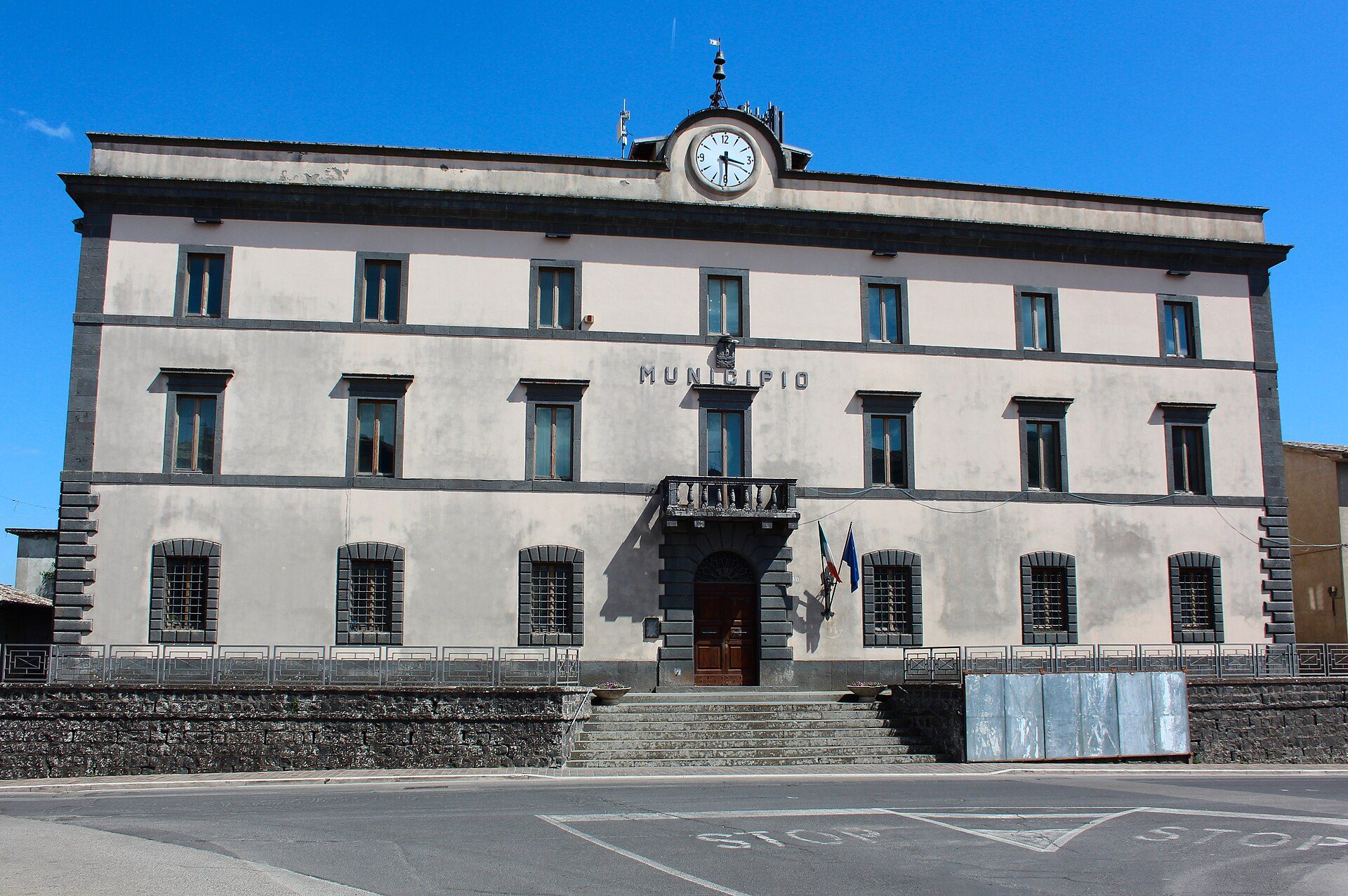
Italy's Ministry of Environment and Energy Security (MASE) signed five single authorizations for battery plants on October 30, 2026, adding 722.5 MW in one day. The largest, decree 322/2026, lets Rinascita Botticelli S.r.l. build a 434.52 MW battery called Castra Energiae Umbria at Castel Giorgio, in the province of Terni. By pv magazine Italia's count, the day's decrees brought October to 24 authorizations and 3.7 GW, after 26 authorizations and about 3.25 GW in September: nearly 7 GW of battery permits in two months.
Those monthly totals are the magazine's own tally of the individual decrees; ESS News carried the same figures on November 3. The decrees themselves show how the ministry is getting there: one national permit per plant, issued over local objections where they arise.
Castel Giorgio's 1.5 GWh and a substation still to be built
The Castel Giorgio plant will use 340 battery containers of 4.472 MWh each, about 1.52 GWh in all by our arithmetic, or roughly three and a half hours of storage at its 434.52 MW rating (the power-versus-energy distinction matters here), plus 2,040 inverters of 213 kW. The developer's schedule puts construction at about 17 months. A buried 380 kV cable of about 848 meters will run to a new 380/132/36 kV Terna substation, also called Castel Giorgio, which the decree lists among the project's connected works.
That substation was the sticking point. In June 2025 the Umbria regional government gave an unfavorable opinion because the plant would connect to a national-grid substation that was "neither existing nor authorized," per the decree. The developer replied in September 2025 that the substation is part of the authorization proceeding, for this plant as for the other producers that will connect to it, and that the design of the grid works came from RWE Renewables Italia, the lead developer, for its wind project. The ministry's services conference closed positively on October 16, 2026, and the decree followed two weeks later. Its answer to "the substation does not exist" is to list the substation in the project it approves.
Four more in Puglia, and objections on the record
The other four October 30 decrees are all in Puglia: CS Bess 2's 103 MW Valle del Forno 2 at Castelluccio dei Sauri (decree 319/2026), Electricity Time Shifting 4's 50 MW plant at San Severo (decree 320/2026), RNE IT SPV 41's 100 MW Bari Loseto (decree 321/2026) and GRV BESS's 35 MW plant at Stornara (decree 323/2026). pv magazine Italia identifies the parents of CS Bess 2, Electricity Time Shifting 4 and GRV BESS as Nuveen, Reden and GR Value. Scheduled construction runs from about nine months at Stornara to about 30 months at Bari.
Towns and regions said no to several of these plants, and the permits came anyway. Under the 2002 law behind them, a single authorization replaces the separate permits, concessions and consents otherwise required. Castelluccio dei Sauri's municipal government gave an unfavorable opinion in September 2025; decree 319 notes that no opposition to the conference's conclusion was then lodged with the Prime Minister. At Stornara, the Puglia region's Foggia office objected in October 2025 that the parcels involved carry quality olive and wine-grape production. The developer answered that the 32 olive trees in the work area would be transplanted onto its own land, and the ministry made a compensation agreement with the town of Stornara a condition to be signed before work starts.
October's biggest permit came earlier in the month. Decree 298/2026 of October 19 authorized Wind Energy & Partners S.r.l. to build 1,000 MW in Brindisi, in four independent 250 MW sections, using 460 battery groups of two 5,015 kWh containers each (about 4.6 GWh by our arithmetic). The Province of Brindisi gave an unfavorable opinion, and the city sent a negative opinion from its landscape office. The plant is to connect at 380 kV to a future expansion of Terna's Brindisi Pignicelle substation once four 380 kV lines in Terna's development plan, including Foggia–Larino–Gissi, are built.
Permits are running ahead of construction
A permit is not a battery. MASE's annual report on authorizations, using Terna data, counted 91 MASE-authorized battery plants totaling 8,170 MW whose works had not started as of April 30, 2026. Five, with 484 MW, were under construction, and two, with 160 MW, had entered service between May 1, 2025 and April 30, 2026. The same report listed 392 battery proceedings still in progress. September and October's roughly 7 GW, by pv magazine Italia's count, joins the authorized column with construction still ahead.
The growth in permits is already changing the money. On October 14, regulator ARERA found compliant Terna's revised rules for the capacity auction for 2028 delivery, which raise derating rates for new batteries because expected authorized storage had risen since June; ARERA says that, all else equal, this reduces what new batteries contracted through the capacity market can earn (resolution 370/2026/R/eel; see our October 20 roundup). The same resolution puts the MACSE auction for storage delivering in 2029 in November 2026.
For Castel Giorgio, decree 322 sets the next steps. Rinascita Botticelli must publish an extract in the Gazzetta Ufficiale within three months of receiving the decree, and appeals to the Lazio regional administrative court run 60 days from that publication. Works must start within 12 months of the authorization becoming unappealable, and the 17-month construction clock runs from the start of works.
Sources
Primary
- Decreto direttoriale 320 del 30 ottobre 2026: autorizzazione unica BESS San Severo (Electricity Time Shifting 4) · Ministero dell'Ambiente e della Sicurezza Energetica (MASE)
- Decreto direttoriale 322 del 30 ottobre 2026: autorizzazione unica BESS Castel Giorgio (Rinascita Botticelli) · Ministero dell'Ambiente e della Sicurezza Energetica (MASE)
- Decreto direttoriale 319 del 30 ottobre 2026: autorizzazione unica BESS Valle del Forno 2, Castelluccio dei Sauri (CS Bess 2) · Ministero dell'Ambiente e della Sicurezza Energetica (MASE)
- Decreto direttoriale 321 del 30 ottobre 2026: autorizzazione unica BESS Bari Loseto (RNE IT SPV 41) · Ministero dell'Ambiente e della Sicurezza Energetica (MASE)
- Decreto direttoriale 323 del 30 ottobre 2026: autorizzazione unica BESS Stornara (GRV BESS) · Ministero dell'Ambiente e della Sicurezza Energetica (MASE)
Supporting
- Rapporto sull'andamento delle autorizzazioni, aggiornamento annuale aprile 2026 (maggio 2025 - aprile 2026) · Ministero dell'Ambiente e della Sicurezza Energetica (MASE)
- BESS, a chi e dove vanno le autorizzazioni di un settembre record · pv magazine Italia
- Deliberazione 14 ottobre 2026 370/2026/R/eel (capacity market DTF 2 2028, second proposal) · ARERA
- Decreto direttoriale 298 del 19 ottobre 2026: autorizzazione unica BESS Brindisi (Wind Energy & Partners) · Ministero dell'Ambiente e della Sicurezza Energetica (MASE)
- BESS, in due mesi autorizzati quasi 7 GW dal Mase · pv magazine Italia
- Italy authorizes nearly 7 GW of battery storage · ESS News
Copies of cited sources are retained where available. If a link no longer resolves, request a copy at contact@theduckcurve.com.