 The Duck Curve
Google-sponsored pilot charged and discharged 9.2 GWh at esVolta batteries
Quintrace, esVolta and LevelTen Energy say the three-month pilot time-shifted environmental attributes Google already owned to hours when its consumption exceeded its renewable supply, each hour verified against the EnergyTag standard.
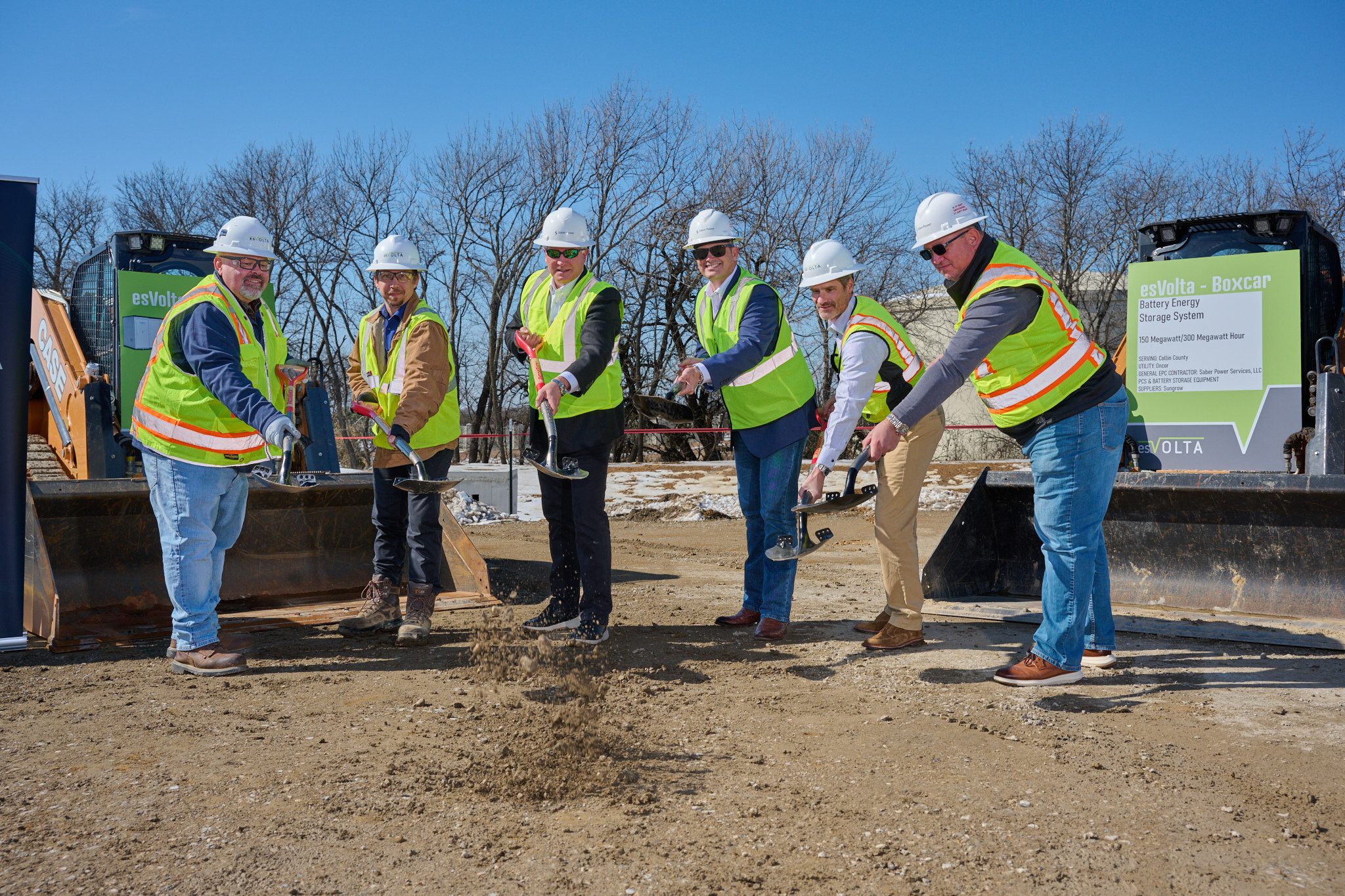
Quintrace, esVolta and LevelTen Energy announced on September 17, 2026 the results of a three-month battery pilot sponsored by Google, in which esVolta's Anole (240 MW / 480 MWh) and Burksol (100 MW / 200 MWh) batteries in Texas charged with renewable energy during a defined mid-day window and discharged during a defined evening window, charging and discharging a total of 9.2 GWh during those windows, with each hour verified by Quintrace against the EnergyTag standard. The release says the pilot used hourly, time-stamped Granular Certificates to shift solar energy to hours when Google's energy consumption exceeded its renewable supply, and describes the result as "opening up the first environmental revenue stream for battery assets."
Per the release, Google contracted ahead of the pilot for defined daily charging and discharging windows based on forecasted gaps in carbon-free energy generation, and the operators dispatched their batteries in line with those guidelines. Google contracted with the battery operators to time-shift environmental attributes it already owned, "without tolling the batteries or assuming any merchant or dispatch risk," which the release says left the operator in full control of the assets, including pre-defined flexibility to pursue energy price signals and to respond to grid emergencies. Quintrace supplied the software used for verification, tracing renewable energy from the moment it charges a battery to the moment it goes back to the grid and applying what the release calls dynamic loss calculations. LevelTen managed the registry accounts to ensure no double-counting and provided the transaction framework for what the release calls storage-shift agreements. The release calls the pilot "a demonstration of feasibility" with two outputs: a commercial pathway giving battery operators a carbon-based revenue stream, and a tracking pathway that accounts for and retires the hourly certificates behind it.
The release gives no price, no dollar figure, no count of certificates issued or retired, no calendar dates for the three months, no clock hours for the two windows, and no name for the solar generation whose attributes were shifted. The two sites hold 680 MWh between them, so 9.2 GWh is about 13.5 times their combined energy capacity, our arithmetic on the release's figures, and the release does not say whether the 9.2 GWh counts charging and discharging separately or together.
esVolta's July 30, 2025 release lists Anole as a 44-acre, two-hour lithium-iron phosphate project in Seagoville, Dallas County, operating since July 2025, and Burksol as a 10-acre, two-hour lithium-iron phosphate project in Afton, Dickens County, operating since March 2025, both selling into the ERCOT market. That release put esVolta's three-project Texas portfolio, which also includes the 150 MW / 300 MWh Desert Willow site, at 490 MW and nearly 1 GWh, "roughly 4% of ERCOT's anticipated 12.2 GW of storage capacity as of July 2025." The September 17 release describes esVolta, a Generate Capital portfolio company, as having approximately 2.0 GWh of storage operating or in construction and over 30 GWh in its pipeline, and Quintrace as part of Quinbrook.
Why the hour is starting to matter
The release says the Science Based Targets initiative "is beginning to require hourly reporting for large energy users" and that the GHG Protocol "is currently evaluating how to address this issue." Version 2.0 of the SBTi Corporate Net-Zero Standard, released June 11, 2026 and effective February 1, 2027 per its version history, carries criterion CNZS-C32: companies shall calculate and report the percentage of scope 2 electricity consumption, in activity pools with significant electricity use, that was contracted or matched with low-carbon electricity on an hourly basis, with significance set at 10 GWh or more of annual consumption in a pool. The standard's own summary describes this as a reporting requirement for what it calls Category A companies with large electricity loads; matching itself stays voluntary, and an optional recognition program lists thresholds of at least 50% hourly matching until 2030, at least 75% until 2035, and at least 90% from 2035.
The GHG Protocol's process is earlier. Its October 14, 2025 blog post on the Scope 2 revisions says the proposals depart from the status quo "by requiring organizations using certificates to match them to consumption hourly, and from deliverable grid regions," with exemption thresholds under consideration that the post says "include thresholds based on the volume of electricity consumption in a given grid region and/or on company size," and an initial analysis of load thresholds that the post says would exempt a majority of CDP-reporting companies while keeping the vast majority of grid load subject to the requirement. Its public consultations page says the consultation ran from October 20, 2025 to January 31, 2026, that "all feedback will be analyzed and work will be undertaken to review and revise the Scope 2 Guidance (2015) in consultation with the Scope 2 Technical Working Group as necessary," and gives no date for a revised guidance; the October 14, 2025 blog post puts publication of the revised Scope 2 Standard at "anticipated late 2027" with implementation phasing in over multiple years. The consultations page carries two 2027 dates, neither for Scope 2: a Forest Carbon Accounting request for information open until February 1, 2027, and a formal public consultation on a draft Actions and Market Instruments standard planned for Q3 2027, a workstream whose white paper the page says "is not yet a draft standard."
Google has a stake in both outcomes. Its 2026 Environmental Report, covering January 1 through December 31, 2025, says the company reached "a global average of approximately 65% CFE across our data centers and offices" in 2025, "remaining relatively flat" against 66% in 2024, during what it calls a 37% annual increase in electricity demand, and "at least 80% CFE across 9 out of 22 grid regions" with Google-owned and -operated data centers. The same report says Google certifies its Granular Certificate portfolio to the EnergyTag Granular Certificate Scheme Standard and applied GCs to its scope 2 market-based footprint in 2025, with long-term clean energy agreements supplying 81% of its market-based reductions and marketplace GCs 19%. Google's other recent energy deals covered by The Duck Curve include its contract to buy energy, capacity and clean energy attributes from MN8's Mammoth Solar project in West Virginia, a 15-year power purchase agreement for 396 MW of enhanced geothermal power from Fervo's Cape Station in Utah, and the SHARE virtual power plant in PG&E territory, which PG&E says Google is funding.
Outlook
Jason Tundermann, LevelTen's chief innovation officer, is quoted in the release: "One of the most exciting parts of this pilot was introducing a new price signal and contracting structure to the utility-scale storage market." If the GHG Protocol adopts the hourly-matching requirement its working group put to consultation, certificate-backed scope 2 claims would need hourly matches, and a storage-shift contract of this shape is one way a buyer holding midday solar attributes could raise its evening matched share without owning or tolling a battery. The SBTi's 50% threshold applies to reporting years until 2030, which gives buyers who want the recognition a reason to look at such contracts before then. What a battery operator can earn from one is not knowable from this release, which prices nothing.
⚠ The Outlook extrapolates from the release's own framing of the contract structure, from the hourly-matching provisions of the SBTi Corporate Net-Zero Standard V2.0, and from the GHG Protocol's consultation proposals cited in the body; the release prices nothing and no adoption decision by the GHG Protocol has been published.
Sources
Primary
- Battery Storage-Shift Pilot Demonstrates How Hourly Renewable Certificates Can Power the Next Phase of Corporate Clean-Energy Goals · esVolta, Quintrace and LevelTen Energy via PR Newswire
Supporting
- esVolta Brings Three Large-Scale Storage Projects On-line in Texas, Meeting 2025 Summer Peak · esVolta
- Upcoming Scope 2 Public Consultation: Hourly Matching and Deliverability · GHG Protocol
- SBTi Corporate Net-Zero Standard, Version 2.0 (June 2026) · Science Based Targets initiative
- Google 2026 Environmental Report · Google
- Feedback Opportunities (GHG Protocol public consultations) · GHG Protocol
Copies of every cited source are retained. If a link no longer resolves, request a copy at contact@theduckcurve.com.