 The Duck Curve
Fluence books a record $3.5B in quarterly orders and a $273.9M annual loss
Backlog reached about $8.9 billion, but missed volumes at contract manufacturers including one in Houston brought liquidated damages that helped push fourth-quarter gross margin negative; fiscal 2027 guidance is still to come.
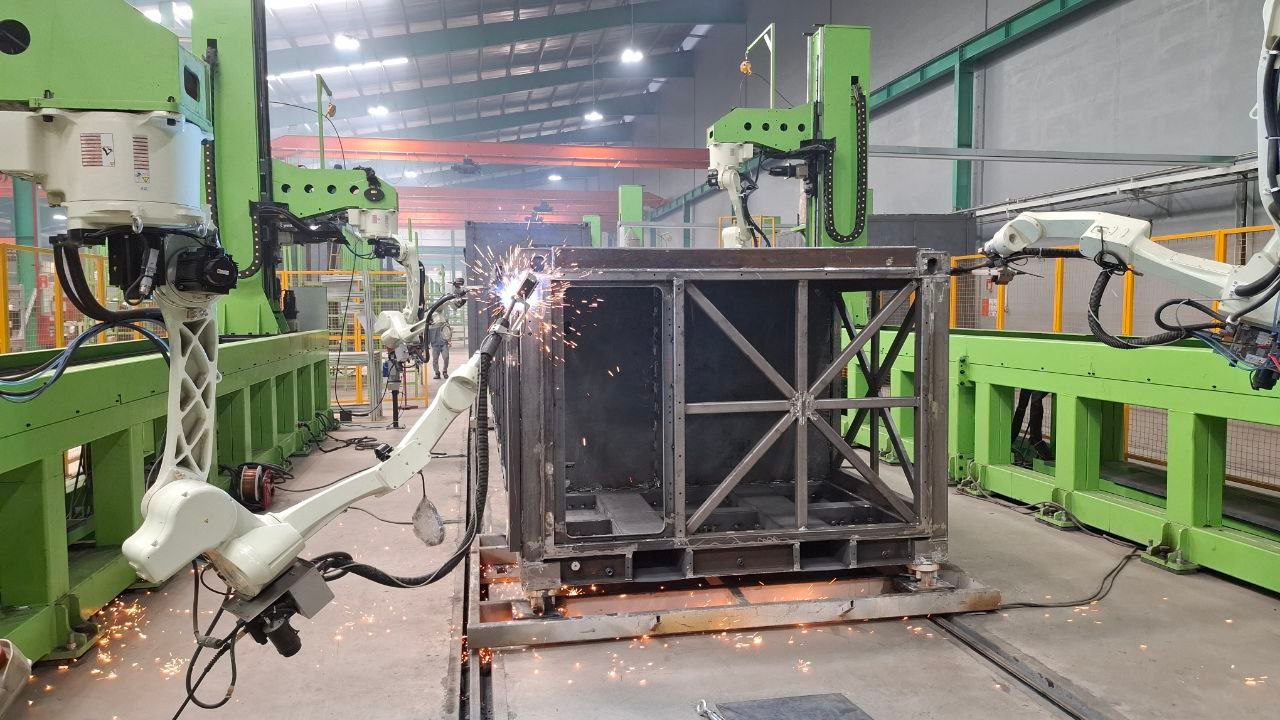
Fluence Energy signed $3.5 billion of storage, service and software orders in the three months to September 30, 2026, the largest quarter in its history, and lost $273.9 million over the fiscal year that quarter closed, the company reported on November 23, 2026. Backlog reached about $8.9 billion, up from $5.3 billion a year earlier. Delays at a contract manufacturer's plant cut deliveries and brought liquidated damages, and fourth-quarter gross margin came in at negative 5.0%.
Demand is the part that worked. Order intake for the year was more than $6.2 billion, more than double fiscal 2025, and interim chief executive Axel Meier says the fourth quarter alone "exceeds the total for all of fiscal year 2025." Measured in power rather than dollars, Fluence contracted 9.0 GW of storage products in fiscal 2026, against 3.4 GW the year before.
Revenue barely moved. It was $2.33 billion for the year, up 3.1% on fiscal 2025, and $744.1 million for the quarter, down from $1.04 billion a year earlier. Gross margin fell to 2.8% for the year from 13.1%. The quarter's net loss of $137.8 million compares with net income of $24.1 million a year earlier, and adjusted EBITDA was negative $202.8 million for the year.
Most of that had been signposted. On September 16, Fluence cut its fiscal 2026 guidance to revenue of about $2.4 billion, from a prior midpoint of about $3.0 billion, and an adjusted EBITDA loss of about $200 million, from a prior midpoint of a $10 million loss. The year landed about $66 million short of the roughly $2.4 billion revenue figure, by our arithmetic, and close to the EBITDA one.
The plant in Houston
The factory that fell behind is in Texas. Fluence's release speaks only of "shipment delays associated with the ramp-up of our contract manufacturer's facility" and never names it; its annual report on Form 10-K, filed the same day, does. Volume was less than expected "primarily due to certain of our contract manufacturers, including the contract manufacturer in Houston, not achieving planned production volumes, which affected our ability to deliver projects on schedule." The shortfall in production, it adds, "was the primary driver for liquidated damages incurred due to project delays." The filing cites staff shortages at facilities including Houston, which led to lower output, quality-related rework and delayed deliveries.
The penalties land on the top line. Fluence books liquidated damages as variable consideration, reducing the contract price "by the expected LD amount when recognizing revenue," so a late project shows up as less revenue rather than as a separate charge. Gross profit fell $230.3 million, or 77.8%, on three causes the 10-K lists: those damages, cost overruns deploying newer products, including on some projects produced in the US, and higher estimated contract costs from battery prices, scope changes and delays, partly offset by refunds of IEEPA tariffs. Neither the release nor the 10-K puts a dollar figure on the damages.
The trouble is domestic. When guidance was cut in September, then-chief executive Julian Nebreda said the international supply chain "has continued to work well." The 10-K still expects the US emphasis on domestic content to give Fluence a competitive advantage, and says Fluence will continue in 2027 to develop more US manufacturing of its own, "including battery module manufacturing and assembly operations intended to support our domestic content strategy and customer demand." It has also stopped taking new orders for its Gridstack Pro 2000 and Ultrastack products, and expects Smartstack, being introduced in phases, to become an increasingly important part of its storage line.
A new team, and no 2027 numbers yet
Fluence's chief executive, chief financial officer and chief operating officer have all taken their jobs since mid-September. Bernerd Da Santos, an AES veteran, was named chief operating officer on September 16. Nebreda left on October 30, and on November 2 director Axel Meier became interim chief executive and Ricardo Roizen interim chief financial officer in place of Ahmed Pasha, while Fluence searches for permanent holders of both jobs (as we reported).
The plan the old team promised has not arrived. In September, Pasha said Fluence would "provide a detailed business plan and a financial update for fiscal year 2027 when we report fiscal year 2026 results." The November 2 leadership announcement moved that: "Financial guidance for fiscal year 2027 is expected to be provided at a later date." The November 23 release carries no fiscal 2027 figures; management holds its call on November 24 at 8:30 a.m. Eastern.
Cash is where the year shows. Operating activities used $370.8 million and free cash flow, as Fluence defines it, was negative $278.4 million. Cash, cash equivalents and restricted cash fell to $378.5 million from $714.6 million, and total liquidity, which adds available capacity under its working-capital facilities, was about $0.9 billion against about $1.3 billion a year earlier. Inventory more than doubled, to $968.6 million from $455.0 million.
The revolving credit agreement requires liquidity of at least $150.0 million through December 31, 2026, then at least $100.0 million plus a consolidated leverage ratio no higher than 3.50 to 1 from January 1, 2027, among other tests; Fluence was in compliance at September 30. Fluence says in the 10-K it believes cash, expected operating cash flow, supply chain financing and the revolver will cover its needs for at least the 12 months after the filing. Pasha's September objective for fiscal 2027 was "neutral to positive operating cash flow to support our backlog without external capital."
Outlook
The backlog sets the scale of the test. Fluence expects to recognize about 37% of its $8.9 billion in remaining performance obligations as revenue over the next 12 months, roughly $3.3 billion by our arithmetic, or about 40% more than fiscal 2026 revenue. Reaching it depends on the same US contract manufacturing that missed planned volumes in fiscal 2026, and under Fluence's accounting, late deliveries on contracts carrying liquidated damages would come off that revenue. The first quarterly results under the new team, and whatever fiscal 2027 guidance it publishes, will show whether the September cash-flow objective survives the change of management.
⚠ The Outlook extrapolates from Fluence's 10-K (about 37% of the $8.9 billion backlog expected to become revenue in the next 12 months; liquidated damages reduce revenue; Houston volume shortfall) and its September 16, 2026 cash-flow objective; the $3.3 billion and 40% figures are our arithmetic, not company guidance.
Sources
Primary
- Fluence Energy, Inc. Reports 2026 Financial Results (Exhibit 99.1) · Fluence Energy, Inc. (SEC EDGAR)
Supporting
- Fluence Energy Announces Revised Guidance for Fiscal Year 2026 (Exhibit 99.1) · Fluence Energy, Inc. (SEC EDGAR)
- Fluence Energy Announces Bernerd Da Santos as Chief Operating Officer (Exhibit 99.2) · Fluence Energy, Inc. (SEC EDGAR)
- Fluence Strengthens Executive Leadership Team to Accelerate Operational Transformation (Exhibit 99.2) · Fluence Energy, Inc. (SEC EDGAR)
- Fluence Energy, Inc. Annual Report on Form 10-K for the fiscal year ended September 30, 2026 · Fluence Energy, Inc. (SEC EDGAR)
Copies of cited sources are retained where available. If a link no longer resolves, request a copy at contact@theduckcurve.com.