 The Duck Curve
Duke Energy Florida turns a second grid battery into a community microgrid
The 11 MW Trenton site, storing energy since 2022, can now island from the grid and carry approximately 1,500 customers for up to four hours during outages.
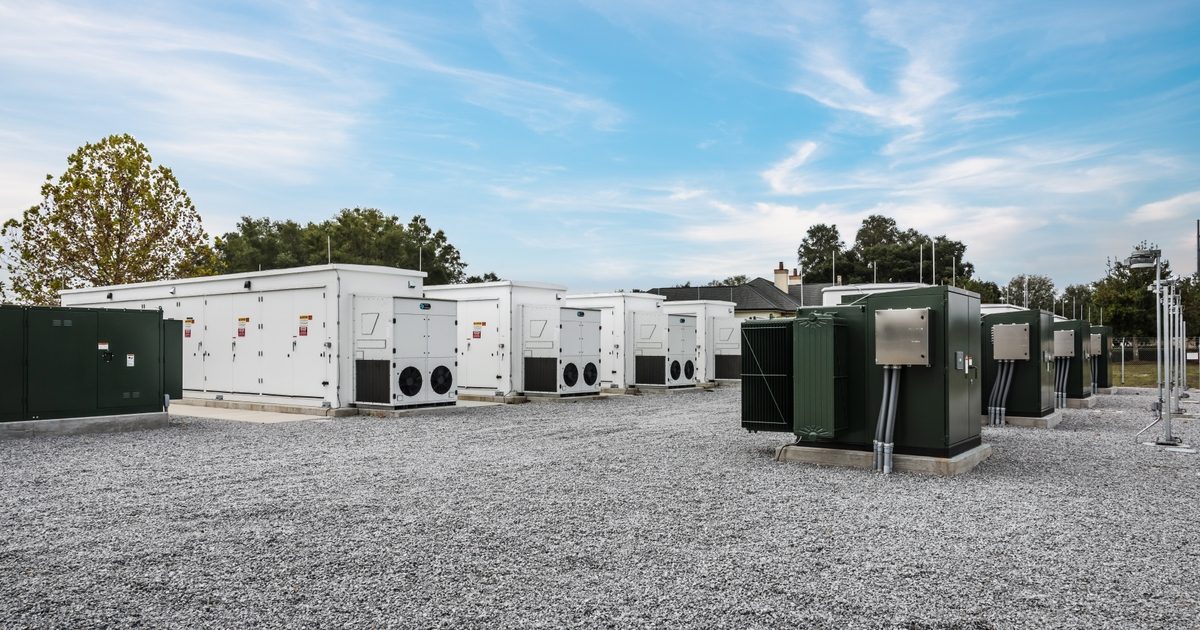
Duke Energy Florida has upgraded its 11 MW Trenton battery site to disconnect from the grid during outages and supply backup power to approximately 1,500 surrounding customers for up to four hours, the utility announced on August 31, 2026. The lithium battery facility sits in Trenton, in Gilchrist County 30 miles west of Gainesville, and becomes the second of Duke's six Florida battery sites able to run as a community microgrid.
The battery itself is 2022 vintage: Duke placed Trenton in service that year to store energy, balance demand, and defer conventional grid upgrades, according to the release. The islanding capability was added in the summer of 2026. When the battery detects an outage, it automatically disconnects from the grid and carries the surrounding area on its own; the release compares the arrangement to a large-scale generator for a whole community, doing what a standard generator does for a single home or business.
Duke's first Florida community microgrid is the 8.25 MW battery in Micanopy, in Alachua County. In a release dated February 26, 2025, the utility said Micanopy had been operating in island mode since January 2025 and could back up approximately 800 customers for up to eight hours. The same release set a target: Duke Energy Florida owns six battery facilities across the state, and the goal was for most of them to be able to enter island mode by 2026. With Trenton, the count stands at two.
The two sites make an odd pair on paper. Trenton is the larger battery by power rating, 11 MW to Micanopy's 8.25 MW, yet Duke describes it backing nearly twice the customers for half as long: up to four hours for approximately 1,500 customers, against up to eight hours for approximately 800. Neither release states the facilities' energy capacity in megawatt-hours, and stored energy, along with the size of the load actually being served, is what sets how long a battery can carry a community (kW vs kWh is the distinction).
The microgrid conversions ride along with a broader hardening program. In the five years through 2026, the August 31 release says, Duke Energy Florida has upgraded 60% of its wooden transmission poles to stronger materials; approximately 50% of its distribution system runs underground; and over 82% of customers are served by self-healing technology that detects outages and reroutes power around damage. The utility supplies 2 million customers across a 13,000-square-mile service area and owns 12,500 MW of capacity, per the release.
The six Florida batteries were built to store power for use during high-demand periods, the release notes; nationally, the utility-scale fleet they belong to neared 52 GW of nameplate capacity by mid-2026 after three years of 70% average annual growth.
Outlook
The open question is the other four sites. Duke's February 2025 goal, most of the six in island mode by 2026, would take at least two more conversions before the end of the year, and neither release says which site is next or whether that timeline still holds. The pace of the first two, Micanopy in January 2025 and Trenton in the summer of 2026, works out to roughly one conversion every year and a half; at that rate the 2026 goal looks tight.
⚠ The Outlook extrapolates from Duke Energy Florida's stated goal, in its February 26, 2025 Micanopy release, of having most of its six Florida battery sites able to island by 2026, and from the dates of the two conversions announced so far.
Sources
Primary
- Duke Energy Florida launches its second battery facility capable of providing backup power for customers · Duke Energy
Supporting
- Duke Energy Florida announces Micanopy battery facility now capable of providing backup power during storms · Duke Energy
Copies of cited sources are retained where available. If a link no longer resolves, request a copy at contact@theduckcurve.com.