 The Duck Curve
Massachusetts awards over $40M for storage at schools, housing and a resort
DOER funded 28 planned resilience batteries it puts at roughly 10 MW, or 44 MWh, six safety grants, and two planned long-duration systems: 4 MW / 80 MWh of sodium-iron chloride at Berkshire East and 0.24 MW / 2.4 MWh of zinc in Medford.
The Massachusetts Department of Energy Resources awarded more than $40 million to 36 projects in three tracks through its Advancing Massachusetts Power grant program, the agency said on September 18, 2026. The tracks: 28 community resilience batteries at schools, affordable housing, community centers, public works and wastewater plants and other critical sites; six safety and education grants; and two long-duration storage projects using sodium-iron chloride and zinc batteries.
DOER says the resilience projects together will add "roughly 10 megawatts, or 44 megawatt hours" of storage. The release's resilience and long-duration tables list power, energy and award per project; its safety table lists organization, description and amount. The 28 resilience rows sum to 10,264 kW, 44,141 kWh and $32,380,532, the six safety grants to $2,537,957 and the two long-duration awards to $5,396,700, for $40,315,189 in all (our sums; the release gives no total beyond its headline). The smallest resilience award is $71,800, for a 23 kW / 80 kWh system at the Black Economic Council of Massachusetts' Sustainability Hub in Boston; the smallest in any table is a $12,800 safety grant to the Franklin Regional Council of Governments.
Grouping the table's Facility Type column ourselves, ten of the 28 rows are affordable or public housing, among them three Boston Housing Authority developments that BHA administrator Kenzie Bok, quoted in the release, names as Lower Mills, Pond Street and Heritage Apartments; eight are schools, counting the Mattahunt Elementary School and Community Center, which Boston Environment Commissioner Oliver Sellers-Garcia says in the release will be one of the city's "first two municipally-owned battery energy storage systems," with the Tobin Community Center the other.
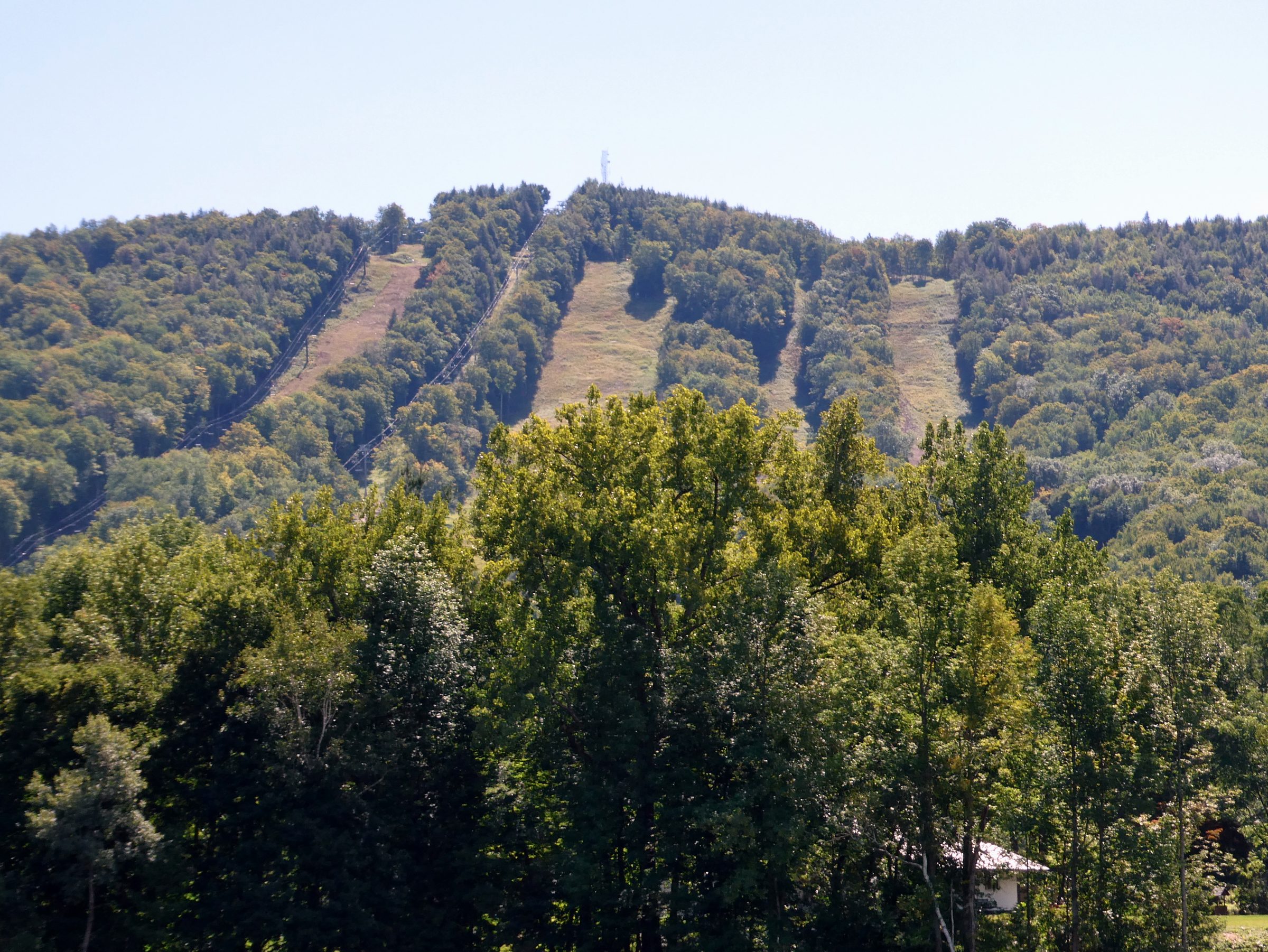
The two long-duration awards are $4,513,200 to Berkshire East Mountain Resort in Charlemont for a 4 MW / 80 MWh Inlyte sodium-iron chloride battery, a 20-hour system by DOER's table, and $883,500 to Mystic Place Apartments in Medford for a 0.24 MW / 2.4 MWh Eos aqueous zinc battery, a 10-hour system. Energy and Environmental Affairs Secretary Rebecca Tepper said the state is "supporting two innovative zinc- and sodium-based storage systems to help us get through major storms," and called the state "a great place to deploy and scale the latest tech." All 36 are grant awards to projects still being planned, not systems in service: the program manual says projects were not required to have submitted an Interconnection Service Agreement to apply under either the resilience or the long-duration track, and Berkshire East general manager Andy Cornish, quoted in the release, said "as we work through the planning process, the potential is exciting."
What the program manual planned to fund
The money traces, per the program page, to a proposed $50 million investment DOER announced in its December 2023 Charging Forward report; the page says approximately $47 million of it was allocated for energy storage initiatives in the straw proposal DOER presented on July 1, 2025, and the manual's funding overview says DOER intends to award approximately $47 million in grants to recipients. Applications closed on January 23, 2026 for preconstruction support and March 13, 2026 for the other tracks; DOER then reopened the long-duration track through May 1, 2026 "due to ambiguities in eligibility requirements."
The program manual, first published December 2, 2025 and last updated April 14, 2026 by its cover, envisioned approximately $22 million to $26 million for 10 to 30 community resilience projects at up to $2.5 million each, $20 million to $22 million for three to five long-duration projects at up to $5 million each, and $2 million to $3 million for five to 20 safety and education grants at up to $800,000. Against that table, community resilience drew about $32.4 million for 28 projects, above its range; long-duration drew about $5.4 million for two, roughly a quarter of the bottom of its range; and safety and education drew about $2.5 million for six, inside its range (our comparison with the manual's Table 1, which it labels approximate). The manual describes two rounds of awards, says DOER "expects to exhaust available funding" between them, and reserves up to $5 million of the resilience budget for implementation grants to applicants who first received feasibility studies. Measured against the manual's approximately $47 million in grants, the listed awards leave about $6.7 million (our arithmetic), most of which that reserve would account for if DOER holds to it. The release does not label the 28 resilience rows by path or say whether any preconstruction awards are among them.
Resilience implementation grants under Path 1 cover up to 75% of project cost, and Appendix B, written for the whole track, raises that to up to 90% for projects located in or serving environmental justice populations as the state's environmental affairs office defines them; Path 2 offers a feasibility study rather than a cost share; long-duration grants cover 50% of project cost up to $5 million and, in the April 14, 2026 text, require a system of at least 100 kW using non-lithium-ion batteries that are not open-loop pumped hydro, with "a duration of 10 hours or greater at nameplate capacity" and interconnection to the "transmission system or the distribution system" of the utility. The manual's change log records the April 14 revision as adding the site-control definition, clarifying the 10-hour minimum and adding that projects may be transmission connected. Single-family homes are ineligible; multifamily affordable housing qualifies for its common or community areas. Among the exclusions the manual lists for the resilience track are projects owned or developed by National Grid, Eversource or Unitil, ConnectedSolutions enrollees, bidders into the state's 83E storage procurements and communities out of compliance with the MBTA Communities Act; the long-duration list repeats those and drops only a bullet on projects of 500 kW or more that paid a 25% interconnection payment before December 2, 2025.
Peer programs, a withdrawn project and the state's framing
Two other utility community-microgrid announcements landed in the three weeks before DOER's. On September 17, 2026, PG&E selected six community microgrids for $30 million, and on August 31, 2026 Duke Energy Florida turned an 11 MW grid battery into a community microgrid, described by customers and backup hours with, as The Duck Curve noted, no megawatt-hour figure in either of Duke's two microgrid releases; DOER's resilience and long-duration tables give both figures for every system.
Massachusetts' larger storage story is harder going. East Point Energy asked the state siting board on September 1, 2026 for permission to withdraw its 125 MW / 500 MWh Tewksbury battery after ISO New England's cluster study listed $65.3 million of upgrades for it.
In the DOER release, Energy Resources Commissioner Elizabeth Mahony said "the vast majority of this funding is headed to environmental justice communities," which she said "typically are burdened by longer power outages, an aging grid, and higher energy bills." State Senator Michael J. Barrett, Senate Chair of the Joint Committee on Telecommunications, Utilities and Energy, said "state government is finding ways to preserve its clean energy commitments in the face of deep resistance from Washington."
Sources
Primary
- Healey-Driscoll Administration Awards More Than $40 Million to Power Critical Facilities During Outages · Massachusetts Department of Energy Resources (mass.gov)
Supporting
- Advancing Massachusetts Power Program Manual (originally published December 2, 2025, last updated April 14, 2026) · Massachusetts Department of Energy Resources (mass.gov)
- Advancing Massachusetts Power · Massachusetts Department of Energy Resources (mass.gov)
Copies of every cited source are retained. If a link no longer resolves, request a copy at contact@theduckcurve.com.