 The Duck Curve
Chubu withdraws Hamaoka 3 and 4 applications after seismic-data inquiry
An outside committee found Chubu picked ground-motion results without a quantitative criterion and built back data for the regulator, but declines to call it falsification; the chairman and president step down September 30.
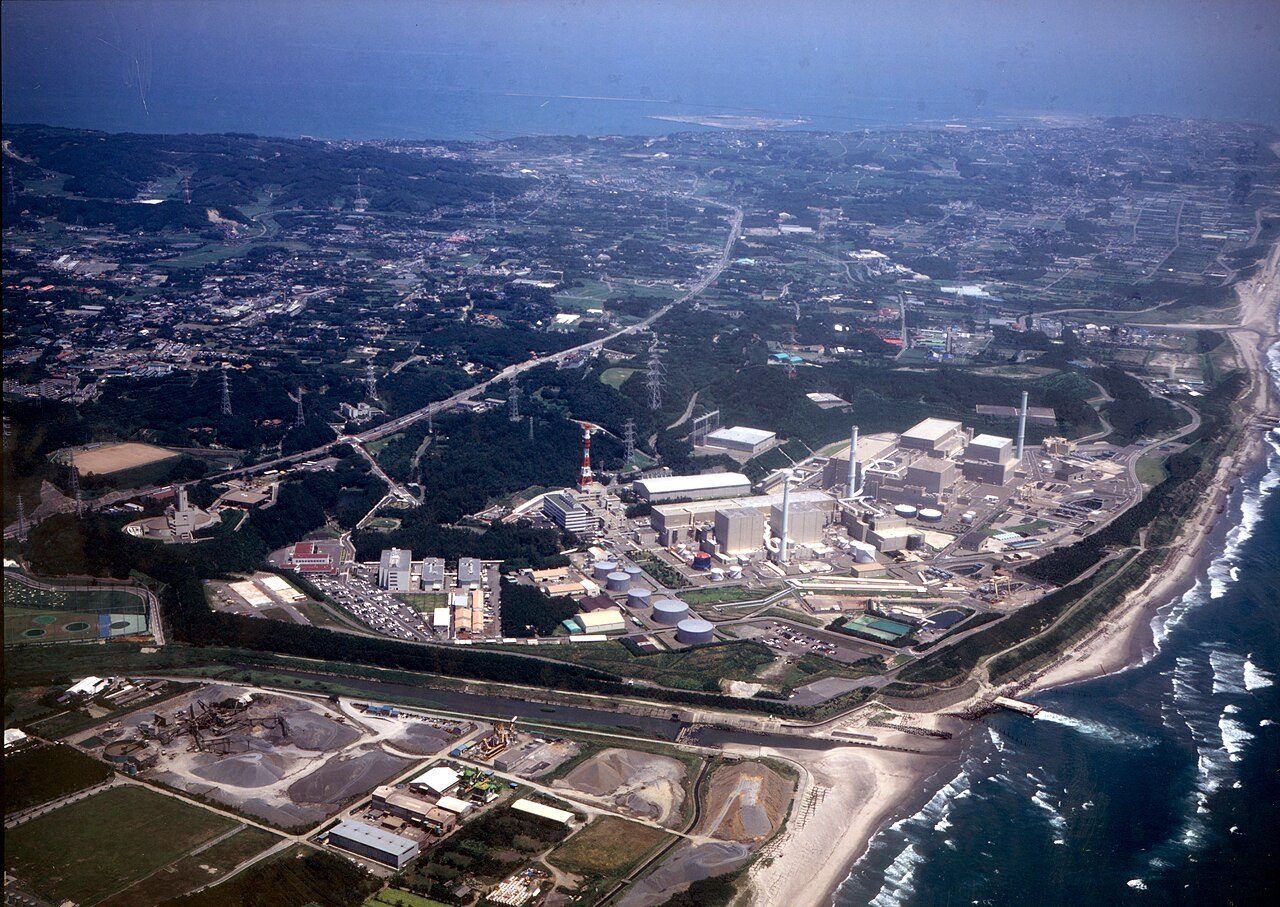
Chubu Electric Power's board decided at an extraordinary meeting on September 14, 2026 to withdraw its applications for units 3 and 4 of the Hamaoka Nuclear Power Station under Japan's post-Fukushima regulatory standards, the company said, after receiving on September 11 an outside committee's report on how it had developed the plant's design basis ground motion. The withdrawal covers the reactor installation change permit applications for both units plus unit 4's construction plan and safety regulation applications; the paperwork goes to the Nuclear Regulation Authority (NRA) as soon as it is ready, the release says. The two boiling water reactors are rated at 1,100 MW and 1,137 MW on Chubu's facilities page, 2,237 MW between them by our addition; unit 5, a 1,380 MW advanced boiling water reactor at the same site, is not covered by these applications.
The same board meeting decided that Chairman Satoru Katsuno and President Kingo Hayashi will step down on September 30, a change the disclosure says is meant to clarify management responsibility, and that Minoru Yasui, a director and senior managing executive officer who once ran the company's Hekinan thermal power station, becomes president on October 1. Both departing executives, the disclosure adds, will take up new positions as special advisers.
What the committee found
Chubu filed three applications for unit 4 on February 14, 2014, the company said that day: the reactor installation change permit, construction plan approval and safety regulation change applications. It filed unit 3's reactor installation change permit application on June 16, 2015, a second release says, naming no other application for that unit, which matches the withdrawal footnote's construction plan and safety regulation applications for unit 4 alone. On January 5, 2026, the company disclosed a suspicion that its selection of "representative waves" in the ground-motion evaluation for that review had been carried out by methods different from what it had explained at NRA review meetings, or intentionally, and it set up a committee of three outside lawyers chaired by Norimitsu Takashima. Chubu received the committee's report on September 11 and published a redacted version on September 14, with an explanatory note from the committee.
The report catalogs 16 numbered acts. For the statistical Green's function method it used to compute ground motion from fault models, Chubu had told the NRA in January 2019 that it ran 20 randomized calculations and selected the one closest to their average. The committee found that from around 2014, in 104 of 225 cases, Chubu instead generated many such sets of 20, sometimes 100 of them, and chose among the resulting candidates by judgment rather than by any quantitative criterion; that from 2018, in 7 cases, it widened the pool to results that were not the closest to the average; that from the first half of 2019 at the latest, in 63 inter-plate earthquake cases, it discarded results above an acceleration threshold and picked from what remained; and that in 34 cases it reused the random inputs from other cases. The report cautions that surviving records were incomplete, so the counts may be slightly off, and the four categories add up to fewer than 225 because some cases could not be classified.
After the NRA asked at a September 14, 2018 review meeting how the representative waves were chosen, the report says, Chubu assembled sets of 20 results after the fact so that its chosen wave would appear to be the one closest to the average, and presented such a figure at the January 18, 2019 meeting beside text stating that it selected the wave with the minimum residual. Similar back data was produced again in 2021, after a second internal helpline report, and in 2025, when the NRA secretariat made inquiries after receiving outside information, the report says. On the 2021 episode, the committee's evaluation is that the nuclear civil engineering department told the helpline secretariat something different from the facts, and that the secretariat, unlike in 2019, consulted neither lawyers nor the president.
The committee's note frames all of this carefully. It writes that it has not found the acts to have been appropriate and problem-free, but that it also considers it inappropriate to reduce them to words such as falsification, fabrication, underestimation of ground motion, or data fraud. Because the details of ground-motion evaluation methods are not necessarily set out clearly in laws and rules, it notes, some of its judgments take in academic viewpoints such as the randomness of the calculations. Citing its concern about that shorthand, the need to read the matter as a whole, and the difficulty and complexity of ground-motion evaluation, it says it will not produce a summary version of the report. Its cause analysis names a unique justification theory among some staff: a belief that the results were safe and technically defensible, and that acts which could obstruct Hamaoka's restart should not be admitted, held with conviction rather than guilt. World Nuclear News summarized the findings on September 14 as data falsification; the committee's own note objects to that shorthand.
What changes at Chubu
Chubu's direction for recurrence prevention, also dated September 14, says that, among its measures, the nuclear division will be renamed the Nuclear Safety Promotion Division once the NRA approves the safety regulation change the renaming requires, an outside director will chair the board, a new department will run organizational culture reform, a dedicated helpline window will take nuclear review matters when the review resumes, and a Shizuoka Regional Headquarters opens on October 1, 2026 with the Hamaoka regional office moved off the plant site.
The regulatory position is that the NRA decided on January 14, 2026 to conduct a nuclear regulatory inspection of Chubu under the Reactor Regulation Act, and that the Ministry of Economy, Trade and Industry and the NRA each ordered reports from the company on January 5 and January 14, which Chubu answered on March 31, according to the report's account of the proceedings. The withdrawal release says the inspection is continuing. The timely disclosure Chubu filed the same day carries the same decision; against the web release, it omits the clause citing the 2014 and 2015 application announcements, and it adds that the effect on the current fiscal year's and future consolidated results is undetermined at this time, and promises prompt disclosure of anything further.
The policy backdrop cuts the other way. The outline of Japan's 7th Strategic Energy Plan, the cabinet decision of February 2025, says it is necessary to maximize the use of both renewables and nuclear power rather than debate one against the other. Per World Nuclear News, 15 reactors have resumed operation since the post-2011 shutdowns, and Hamaoka 3 and 4 were among 17 still in restart review.
Outlook
If the withdrawal is filed as described, it ends a review that began in 2014 rather than pausing it; any future bid would start with fresh applications from a division that first has to be renamed and reorganized. The committee's recommendations open with additional fact-finding it says Chubu still needs to carry out, so the September 14 documents are unlikely to be the last word, and the NRA's inspection, not Chubu's board, will decide what the regulator makes of them.
⚠ The Outlook extrapolates from Chubu's September 14, 2026 withdrawal release and recurrence-prevention document, the investigation report's table of contents and cause analysis, and the METI plan outline; no NRA statement on the withdrawal is cited.
Sources
Primary
- 浜岡原子力発電所 3 号機・4 号機の設置変更許可申請等の取り下げ (timely disclosure, TDnet format) · Chubu Electric Power Co., Inc.
- 浜岡原子力発電所の新規制基準適合性審査における基準地震動策定に係る不適切事案に関する調査報告書の公表 (Publication of the investigation report) · Chubu Electric Power Co., Inc.
- 調査報告書(開示版) (Investigation report, disclosed version), Special Investigation Committee, 2026-09-11 · Special Investigation Committee (三名の外部弁護士) / published by Chubu Electric Power Co., Inc.
- 代表取締役の異動について (Change of representative directors) · Chubu Electric Power Co., Inc.
- 浜岡原子力発電所3号機・4号機の設置変更許可申請などの取り下げ (Withdrawal of the reactor installation change permit applications etc. for Hamaoka units 3 and 4) · Chubu Electric Power Co., Inc.
Supporting
- 浜岡原子力発電所4号機に係る新規制基準への適合性確認審査のための申請について (Application for the new-regulatory-standards conformity review of Hamaoka unit 4) · Chubu Electric Power Co., Inc.
- 浜岡原子力発電所3号機の原子炉設置変更許可申請について (Reactor installation change permit application for Hamaoka unit 3) · Chubu Electric Power Co., Inc.
- The 7th Strategic Energy Plan (Outline) · Agency for Natural Resources and Energy, Ministry of Economy, Trade and Industry (Japan)
- 浜岡原子力発電所の新規制基準適合性審査における基準地震動策定に係る不適切事案について (Initial disclosure) · Chubu Electric Power Co., Inc.
- 浜岡原子力発電所の新規制基準適合性審査における基準地震動策定に係る不適切事案に関する再発防止策の方向性 (Direction of recurrence prevention measures) · Chubu Electric Power Co., Inc.
- Chubu withdraws restart applications for Hamaoka units · World Nuclear News
- Overview of Major Facilities, Hamaoka Nuclear Power Station · Chubu Electric Power Co., Inc.
Copies of every cited source are retained. If a link no longer resolves, request a copy at contact@theduckcurve.com.