 The Duck Curve
Snowy 2.0 target cost climbs to A$22.2 billion, finish slips to late 2029
Snowy Hydro is also allowing for a A$25 billion scenario, slightly more than double the A$12 billion set at the 2023 reset, after a June audit found the reset contract's incentive framework was not working as intended.
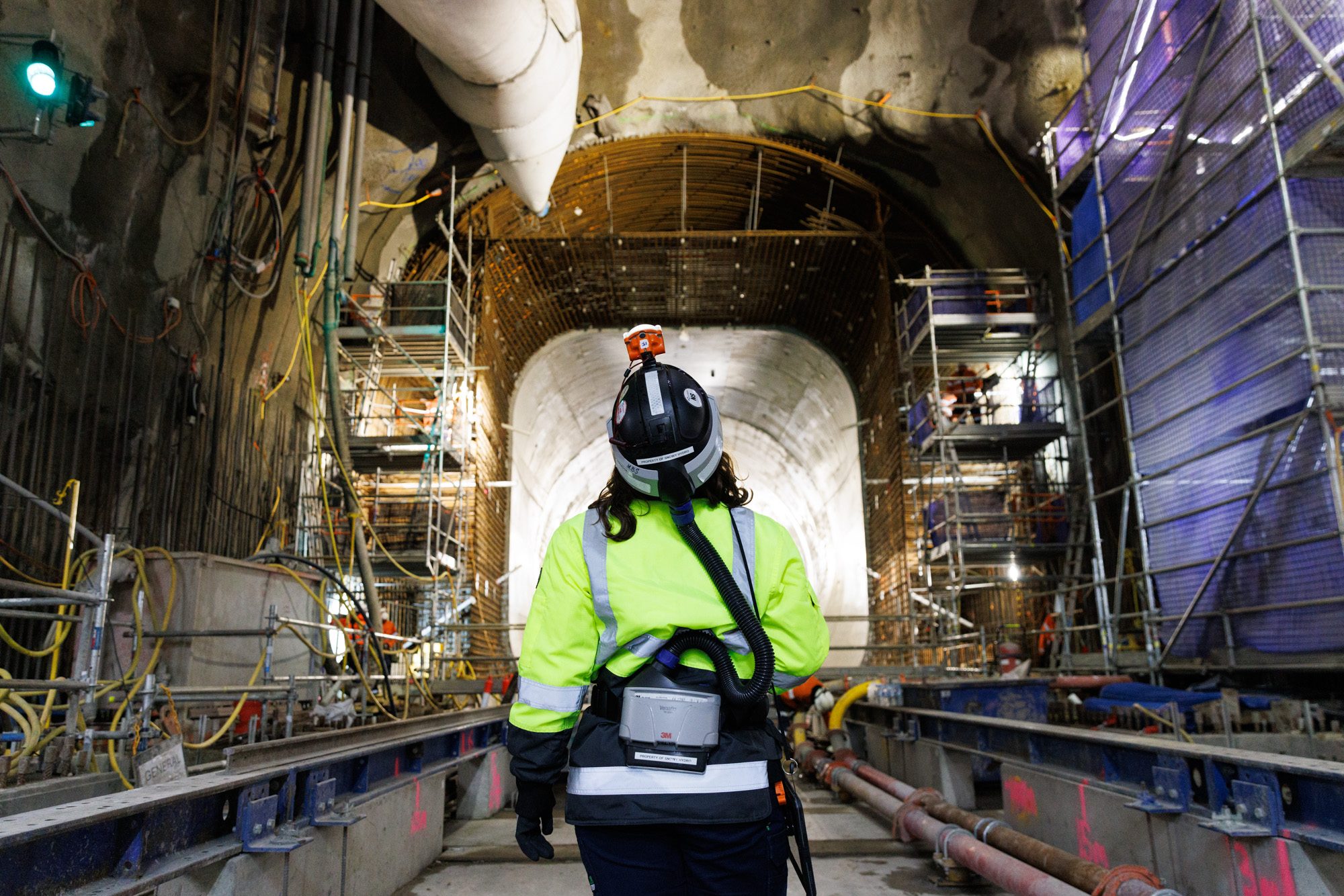
Snowy Hydro now puts the target cost of Snowy 2.0, the pumped hydro expansion of the Snowy Mountains Scheme, at A$22.2 billion, and is allowing for a scenario in which it reaches A$25 billion. The Commonwealth-owned company announced the figures on October 22, 2026 after a cost reassessment by its principal contractor, Future Generation Joint Venture (FGJV), and moved the target for full commissioning to late 2029.
The previous number was A$12 billion, set when Snowy reset the project in August 2023. The new target is 85% above that, by our arithmetic, and the A$25 billion allowance is slightly more than double it. The 2023 reset also promised first power in the second half of 2027 and commercial operation of all units by December 2028. The October 22 release gives a completion date of late 2029 and no first-power date. In 2018, the final investment decision had estimated A$6.1 billion with early works, according to the Australian National Audit Office.
The money buys depth more than power. The 2023 reset added 200 MW, taking generating capacity to 2,200 MW, alongside 350,000 MWh of storage, which Snowy described as 160 hours of generation at maximum output; the kW vs kWh distinction is the whole point of the project. Snowy says that storage is equivalent to around 26 million home batteries.
Why it costs more
Snowy names four primary reasons for the increase: design immaturity at the time of the final investment decision, which detailed technical analysis is still uncovering; construction complexities that left FGJV short of its productivity targets; cost and planning underperformance by FGJV that led to the delivery scope being underestimated; and global cost escalation for equipment, services and people beyond the allowances made at the 2023 reset. Design immaturity at the investment decision was on the 2023 reset's list too.
The reassessment ran long as well. When Snowy ordered it in October 2025, with the project 67% complete and still set for December 2028, it said the work was "expected to take up to nine months to complete." It took a little over a year.
Chief executive Dennis Barnes defended the 2023 decision to drop the fixed-price contract. "I have no doubt that moving from a fixed price contract, which was never suitable for such scale, uniqueness and complexity, has protected the project from an even greater cost increase," he said. Snowy also says the reset contract "has strong provisions that motivate FGJV to manage cost and program," and lists new controls including a project control office it directed FGJV to set up, embedded independent delivery and cost experts, a board oversight committee with external megaproject advisers, and a new FGJV project director.
What the auditor found
The national auditor read the same contract less kindly in June. Its performance audit, published June 18, 2026, rated Snowy Hydro's management of the project "partly effective" and found that its "incentive framework is not working as intended." It said the reset shifted cost risk from the contractor to Snowy Hydro, described an environment in which "the cost risk is being held primarily by the Australian Government," and found that Snowy "does not have a robust understanding of the forecast cost to complete of the project."
Late 2029 is not a new date for Snowy's board. An April 2023 report to a board subcommittee, before the reset, estimated an unmitigated completion date of September 11, 2029, the audit found. More than three years and A$10.2 billion of added target cost later, the official target has landed in late 2029.
The old budget was also running out. By March 31, 2026, the auditor counted A$11.1 billion spent with the project 73% complete, against the A$12 billion budget then in force.
Who pays
Snowy says the A$22.2 billion "is not the amount that will have to be funded by taxpayers." At the A$12 billion estimate, around A$4 billion was Commonwealth investment that Snowy Hydro did not need to repay, and the majority was funded by government and bank loans that Snowy must repay with interest, as well as Snowy's own cash flows. "Work is underway on the Commonwealth's preferred capital strategy at the new cost," the release says, without a figure or a date. The auditor had already flagged in June that there was likely to be a further request to government for financial support, after the 2024–25 federal budget announced A$7.1 billion over four years for Snowy Hydro to keep building.
Progress underground
The construction picture is better than the cost one. Snowy reports drill-and-blast tunnels 95% complete (20% at the reset), tunnel boring machine (TBM) tunnels 65% (19%), power station complex excavation 90% (2%), and construction design 96% (44%). More than 5,000 people work on the project. Construction of the underground power station has started, decommissioning has started on TBM Lady Eileen Hudson after it finished its second tunnel, and TBM Florence is almost halfway through its 15-kilometre drive.
The pitch has grown along with the price. In October 2025, Barnes said Snowy 2.0 would provide "more than half of the long-duration storage the grid needs by 2050." On October 22 he said: "More than half of the total energy storage the grid needs by 2050 will come from Snowy 2.0 alone." Snowy also cites an independent economic study by GHD, which it says found the project will add A$18.3 billion to the Australian economy during delivery and reduce wholesale electricity costs by more than A$7 billion to 2075.
Sources
Primary
- Snowy 2.0 cost reassessment complete · Snowy Hydro Limited
Supporting
- Securing the future of critical energy transformation projects · Snowy Hydro Limited
- Cost reassessment underway for on-schedule Snowy 2.0 · Snowy Hydro Limited
- Delivery of Snowy 2.0 (Auditor-General Report No. 39 of 2025-26) · Australian National Audit Office
Copies of cited sources are retained where available. If a link no longer resolves, request a copy at contact@theduckcurve.com.