 The Duck Curve
Oregon cancels I-5 NEVI charger grant, opens $15.9M third round
Two of Oregon's three first-round NEVI corridors have now lost their developer; ODOT expects its first NEVI-funded station, Electrify America's at a Gladstone 76, to open in December 2026.
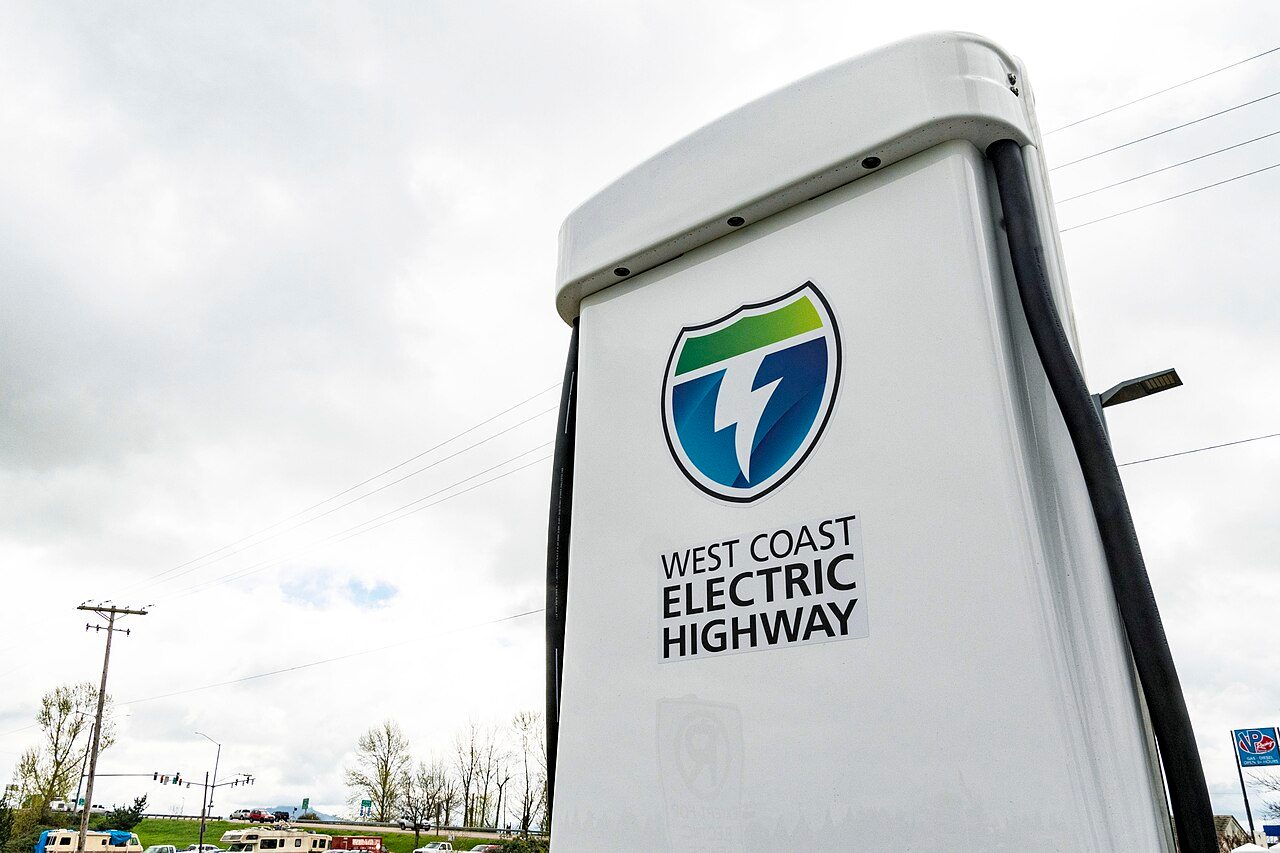
Oregon has cancelled the National Electric Vehicle Infrastructure (NEVI) grant agreement for fast chargers on Interstate 5 south of Eugene and put the corridor into a third round of grants. The company selected for those stations "couldn't move forward with their projects," the Oregon Department of Transportation says on its NEVI program page. ODOT's Round 3 notice of funding opportunity, advertised October 21, 2026, offers $15,949,230 across 10 highways, including $2,333,835 for at least four NEVI-compliant stations on I-5. Applications are due January 22, 2027.
That company was EV Gateway, which had planned four stations between Cottage Grove and Medford: an O'Reilly Auto Parts in Cottage Grove, Roseburg Marketplace, a Sagwal gas station in Wolf Creek and a WinCo in Medford, per the September 18, 2026 version of ODOT's page. ODOT had described the path to cancellation in advance. OPB reported on October 2 that, according to Brett Howell, ODOT's transportation electrification coordinator, EV Gateway had until the end of September to show "meaningful progress," after which ODOT would give it a 15-day deadline to comply with its contract, then cancel and seek a different developer. OPB said the company had not responded to its requests for comment. ODOT's page now dates the cancellation to October 2026.
That makes two of Oregon's three first-round corridors that have lost their developer. ODOT cancelled its U.S. Highway 97 agreement in October 2025, saying the selected company "was unable to meet all obligations outlined in our grant agreement," and moved the road into Round 2; ODOT's December 2024 list of "intent to award" finalists had named EV Charging Solutions for that road. The surviving first-round grant is Electrify America's on Interstate 205, with stations planned at a Fred Meyer in Happy Valley and a 76 gas station in Gladstone.
The first station, and the next 20
The Gladstone 76 is now expected to be the first NEVI-funded station in Oregon, opening in December 2026, ODOT says, with several other stations to follow in the first few months of 2027. In September the page said ODOT expected the first stations to be "operational in the second half of 2026." December still qualifies, with no month to spare. OPB's October 2 report had Oregon preparing for its first federally funded fast chargers in November, and Electrify America expecting to break ground in Gladstone in October. OPB also reported that no federally funded fast-charging station was in operation anywhere on the West Coast.
Round 3 takes in what ODOT calls "all remaining Alternative Fuel Corridors": Interstates 5, 82, 84 and 405, U.S. Highways 20, 26, 95, 97 and 101, and Oregon Route 42. Per-corridor funding runs from $506,574 on I-84 to $4,000,000 on U.S. 26, and the notice's station minimums add up to 20 by our count, matching ODOT's estimate that the round will fund at least 20 stations. Applications that ask for more than a corridor's available funding will be disqualified.
The stated goal is "fully built-out" certification from the Federal Highway Administration at the end of the round. That certification is what frees the money from the corridors: once a state determines and FHWA certifies that its corridors are fully built out, NEVI funds may go to charging on any public road, per FHWA's interim final guidance of August 11, 2025. Wisconsin is past that point: FHWA certified its corridors on February 11, 2026, per WisDOT, and the state announced $25 million in NEVI grants for 42 sites on September 8.
Round 3's rules, and the rounds before it
The notice lists changes from Round 2, including two in how bids are judged. Round 2 promised priority to applicants proposing a whole corridor; no full-corridor applications were submitted, so Round 3 evaluates all proposals on an equal basis. And cost proposals, previously scored on how much match funding a grantee put up, are now ranked by total project cost divided by the number of 150 kW ports proposed. Federal funds cover up to 80% of eligible costs, paid as reimbursement, with the applicant covering at least 20%.
The notice also prices reliability. Annual operations and maintenance reimbursement is withheld at 10% for each port that misses the 97% average annual uptime threshold, up to 40%. Stations that include battery energy storage can earn up to five points in scoring.
Oregon expects $52 million in NEVI formula funds over federal fiscal years 2022 through 2026 and anticipates installing or upgrading about 50 stations through the program, an estimate ODOT says may change with project and material costs. All seven Round 2 grantees have executed agreements for stations on I-84 and U.S. Highways 20, 26, 97 and 101, and ODOT expects at least five of those locations to open in the first few months of 2027. It intends to make Round 3 conditional awards by the end of February 2027.
First-round attrition is not unique to Oregon. North Carolina announced its first round in September 2024 as nine conditional locations; by September 2026, NCDOT's awards page listed five first-round stations under construction.
Sources
Primary
- Notice of Funding Opportunity: Oregon National Electric Vehicle Infrastructure Program, Round Three · Oregon Department of Transportation
Supporting
- National Electric Vehicle Infrastructure Formula Program Interim Final Guidance · Federal Highway Administration
- National Electric Vehicle Infrastructure Program in Oregon · Oregon Department of Transportation
- National Electric Vehicle Infrastructure Program in Oregon (archived September 18, 2026) · Oregon Department of Transportation (via Internet Archive)
- 2 years in, Oregon still has no electric vehicle fast-charging stations through a $52 million federally funded program · OPB (Oregon Public Broadcasting)
Copies of cited sources are retained where available. If a link no longer resolves, request a copy at contact@theduckcurve.com.