 The Duck Curve
La Verne lifts evacuations after battery fire at MWD's Weymouth plant
One of the two 250-kilowatt units involved at MWD's La Verne plant burned from September 22, 2026 and the second overheated; the city expects the packs off site within 3 to 5 days of September 25, pending materials.
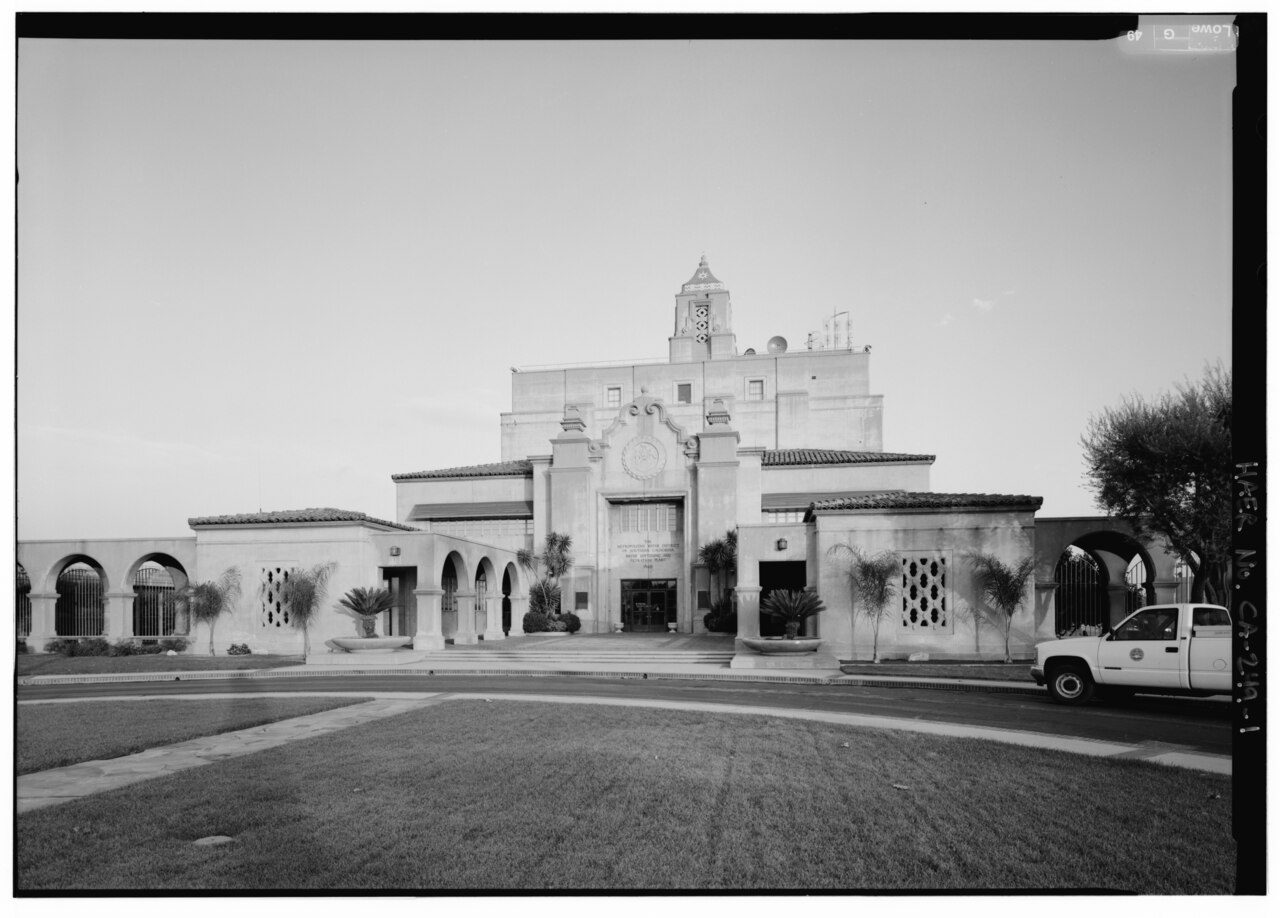
The City of La Verne, California said on September 25, 2026 that all evacuation orders from a lithium battery explosion and fire at the Metropolitan Water District of Southern California's F.E. Weymouth Water Treatment Plant had been lifted, according to the city's incident bulletin. The fire began at approximately 11:40 a.m. on September 22, 2026 and involved two battery storage units, which the city's September 25 press conference summary describes as two 250-kilowatt lithium-ion batteries in an indoor-outdoor facility, installed to support a 2-megawatt solar farm; La Verne Fire Department Battalion Chief Mark Savage described the facility to the Claremont Courier on September 22 as outdoor. One of the two burned; the second, per the city, sustained damage and elevated temperatures. Crews removed the modules overnight into September 25, the city says. The Los Angeles Times reported on September 24, citing the fire department, that the fire began inside one of four 250-kilowatt battery containers at the site, and that the facility's battery storage system "was brought on line in June," a month the Times gives without a year; from its September 24, 2026 dateline, June 2026. The city says the two additional battery packs not involved are off and that the system remains under warranty. No document gives the units' energy capacity in megawatt-hours (kW vs kWh).
By the afternoon of September 24 the city reported both banks stable, Battery Bank 1 "with much of the battery material consumed by fire." On air quality, the city's September 23 afternoon summary said monitoring showed "low-level air-quality impacts consistent with a lithium battery incident" and no hazardous conditions off the property; its September 25 summaries say monitoring remained within the normal range throughout.
The Courier also reported Savage saying one person suffered minor injuries and was transported to a local facility; the city bulletin does not mention an injury.
Per the city, the dismantled packs are expected to be removed from the site within 3 to 5 days of September 25, pending specialized packing and neutralization materials; a formal MWD-led investigation begins once they are gone; and MWD does not anticipate the two unaffected packs returning to operation in the foreseeable future. The City Council meets on the incident on September 29, 2026.
On September 23, Metropolitan said its water treatment operations had not been impacted and that, once the immediate emergency has been addressed, it would support the investigation into the cause and assess the battery units before determining next steps; on September 25 it said the La Verne Fire Department had determined the potential hazards to the community had been mitigated. The solar array dates from 2016, against the June 2026 the Times gives the batteries: the San Gabriel Valley Tribune reported in August 2016 that MWD had switched on a 3-megawatt (at capacity) installation at Weymouth and quoted MWD chief operating officer Debra C. Man saying solar energy that could not be used would be sold back to Southern California Edison. The Times, for its part, describes the site as a smaller facility where solar energy is captured and stored for internal use rather than sent into the broader grid. The city's summary calls the array a 2-megawatt solar farm.
What California's statutes and regulators say about a site like this
Senate Bill 38, approved by the Governor on October 7, 2023, amended Public Utilities Code section 761.3 to require that "each battery energy storage facility located in the state and subject to subdivision (a)" have an emergency response and emergency action plan, submitted to the county and, if applicable, the city. Its subdivision (f) lists three categories the section "does not apply to": a facility owned by a local publicly owned electric utility; "a public agency that may generate electricity incidental to the provision of water or wastewater treatment"; and "a facility owned by a city and county operating as a public utility, furnishing electric service as provided in Section 10001." Subdivision (c), "except as otherwise provided" there, carves out nuclear plants, federally qualifying small power and cogeneration facilities, and generation units at a customer site serving only that customer's load. On the face of that text the plan requirement does not reach a public water agency's generation such as MWD's, a water district in the Tribune's description. Neither the city nor MWD has said whether MWD had an emergency response plan for these units or shared one with La Verne.
Senate Bill 283, chaptered on October 6, 2025, reaches only large systems; its chapter defines the "energy storage system" it governs as "a stationary electrical energy storage system," as defined in the California Building Standards Code, "that is capable of storing 10 megawatthours or more of energy," and the Energy Commission certification path it amends applies, per the bill's digest, to systems capable of storing 200 megawatthours or more. Under the local chapter, for applications submitted after January 1, 2026 a local jurisdiction may not approve a system unless it requires, as a condition of approval, that the system be inspected after installation and before operation "by the respective authorities having jurisdiction, including the authority that has jurisdiction over fire suppression." The two units involved would need 20 hours at full power to reach the 10 megawatt-hour floor, all four containers 10 hours, by our arithmetic; no document says whether the four count as one system.
The Times reported that, independent of the Legislature, the California Public Utilities Commission, the California Department of Forestry and Fire Protection and the California Energy Commission have made regulatory changes around battery sites "in recent years," that best practices and battery technology have improved since Moss Landing began construction in 2020, and that most of these improvements have focused on larger utility-scale sites such as Moss Landing. Assembly Bill 303, which per the Times would have required local authorities to be part of the permitting process and set a 3,200-foot setback from sensitive areas such as schools, homes, hospitals and environmentally sensitive habitat, did not advance in the 2025-26 session, and its author, Assemblymember Dawn Addis, plans to reintroduce safety legislation in the next cycle. The Times quoted Dustin Mulvaney, a professor of environmental studies at San Jose State: "The safety conversation has been focused on the utility-scale stuff." The evacuation and emergency response here, he added, made him wonder whether small battery sites now need more attention. The fire came four days after the September 18, 2026 flare-up in the Moss Landing 300 building, where, as The Duck Curve reported on September 19, Vistra believes about 1,200 of roughly 5,000 unburned modules still inside the building ignited.
Outlook
The next dated steps are the city's 3-to-5-day removal window from September 25, pending materials, the MWD-led investigation after that, and the September 29 council meeting. With MWD not expecting the two undamaged packs back in the foreseeable future and four containers on the site per the Times, the plant has no storage in service for as long as that holds. The water-agency exclusion in section 761.3 and the 10 megawatt-hour floor in SB 283's chapter are where a small-site fire like this one would show up in statute, if Addis's next bill reaches them.
⚠ The Outlook extrapolates from the City of La Verne's September 25, 2026 press conference summary, MWD's September 23 and 25 statements, the Los Angeles Times' September 24 report (its four-container count and Assemblymember Addis's stated plans), and the text of Public Utilities Code section 761.3 as amended by SB 38 and of the chapter SB 283 added.
Sources
Primary
- Metropolitan Water District - September 2026 (incident bulletin) · City of La Verne, California
Supporting
- Metropolitan Water District saving money lost during drought by investing in solar · San Gabriel Valley Tribune (Southern California News Group)
- SB-38 Battery energy storage facilities: emergency response and emergency action plans (2023-2024), Chapter 377, Statutes of 2023 · California Legislative Information (leginfo.legislature.ca.gov)
- SB-283 Energy storage systems (2025-2026), Chapter 407, Statutes of 2025 · California Legislative Information (leginfo.legislature.ca.gov)
- Evacuations, one injury in explosion, fire at La Verne water facility · Claremont Courier (Andrew Alonzo)
- Metropolitan issues statement on Weymouth Water Treatment Plant fire incident · Metropolitan Water District of Southern California
- Lithium-ion battery fires upend California communities · Los Angeles Times
- Metropolitan issues latest update on Weymouth Water Treatment Plant fire incident · Metropolitan Water District of Southern California
Copies of every cited source are retained. If a link no longer resolves, request a copy at contact@theduckcurve.com.