 The Duck Curve
Helion and CFS sign CHIPS letters of intent for fusion chip R&D
The awards are not final, and Commerce would take a non-voting equity stake in each company; Helion puts Commerce's stake at $175 million, the same as its award ceiling.
Two fusion developers are in line for federal chip money. The Department of Commerce announced on October 22, 2026 that it has signed letters of intent with four companies for up to $389 million in R&D awards under the CHIPS and Science Act, and the two largest are for fusion: up to $175 million for Helion and up to $85 million for Commonwealth Fusion Systems (CFS). The other two are Vertical Semiconductor, up to $73 million for vertical gallium nitride power devices, and Sibelco, up to $56 million for ultra-high-purity quartz used in crucibles, glassware and other hardware across the semiconductor value chain.
A letter of intent is a step short of an award. Commerce's release frames the research as work each company will conduct under "the final awards." CFS describes its $85 million as a proposed federal R&D award, and Helion calls its money an expected federal award. None of the three releases gives a date for a final award.
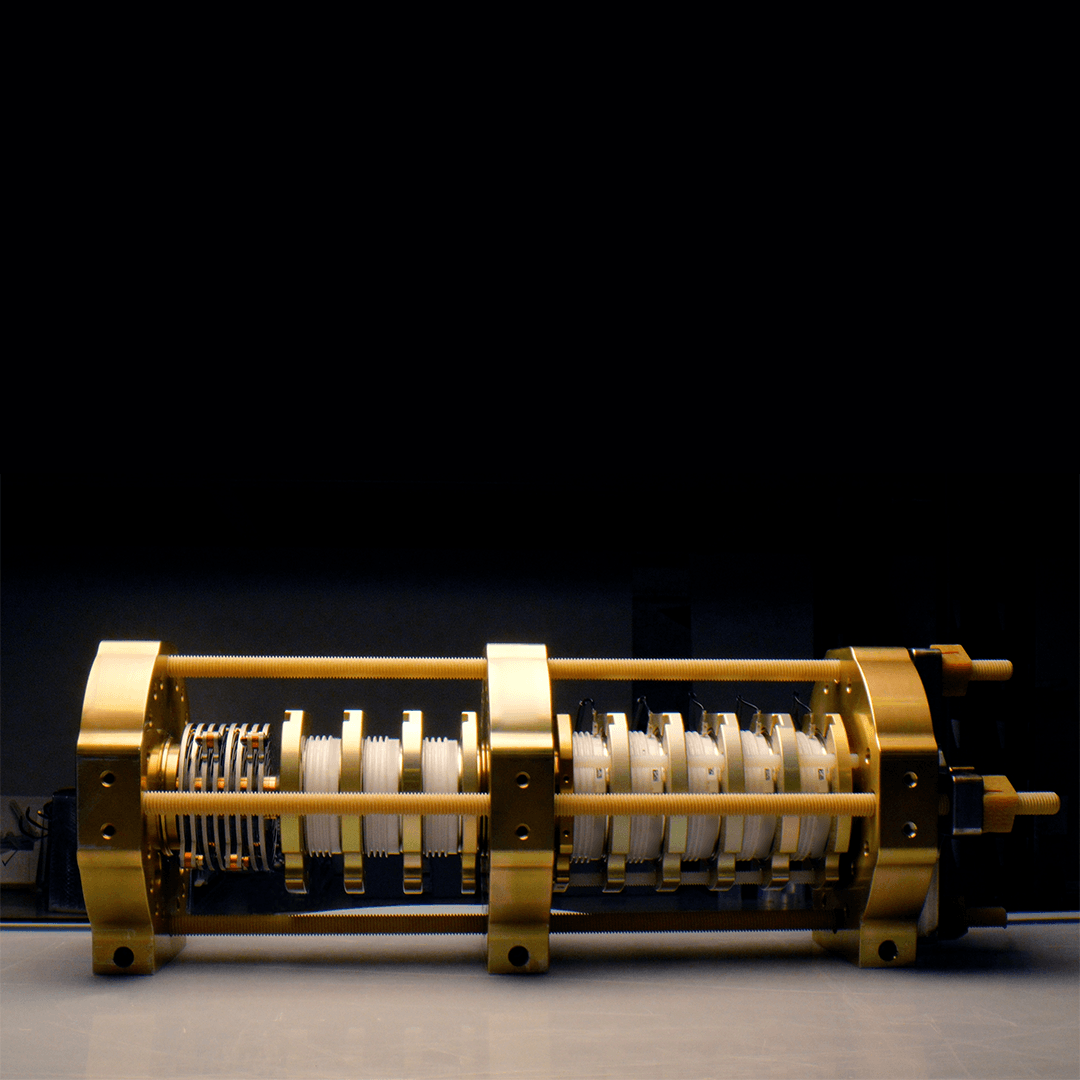
Helion's fusion systems run on pulsed power, and the parts that switch it are what its award pays for. Commerce says the money is for high-voltage power semiconductors and power modules "designed for high-peak-current pulsed-power applications in fusion power generation," which "will power, control, and harvest energy from the magnets driving Helion's fusion generators." Helion says semiconductors that perform at the levels it requires "are currently only available from overseas manufacturers." It expects $50 million of additional private investment alongside the federal award, for $225 million in total by chief executive David Kirtley's count. Helion says more than $100 million will go to semiconductor and advanced-packaging R&D in Everett, Washington, bringing over 100 jobs, and about $80 million to tooling, design and process development with an industry partner in Burlington, Vermont; the remaining funds go to R&D on packaging and manufacturing automation.
CFS's list is broader. Commerce describes its award as R&D on semiconductors for radio-frequency plasma heating, power electronics, embedded electronics for fusion diagnostics, and radiation-hardened electronics. CFS's release adds semiconductor technologies for robotic maintenance systems that it says enable better performance at its ARC power plants, and "novel fast and embedded controllers needed to manage fusion plasma and systems at power plant scale." It also lists artificial intelligence among the semiconductor technologies it calls important to fusion; on October 8, DOE picked CFS to lead a project building an AI digital twin of its SPARC machine.
The money comes with terms that read more like an investment than a grant. Commerce says it "will receive a minority, non-controlling and non-voting equity stake in each company as a condition for making the awards, enhancing the return for the U.S. taxpayer." Helion's release puts a figure on its share: once a definitive award agreement is signed, Commerce "would receive a $175 million non-voting interest in Helion based on its most recent Series G preferred stock valuation as a payment for entering into the Award." That is the same figure as the award's $175 million ceiling. If the valuation is the $15.5 billion post-money figure Helion announced with its Series G in June, $175 million is a little over 1 percent of the company, by our arithmetic. CFS's release does not mention the equity condition or put a value on a stake.
Next to the private rounds, the federal sums are small. Helion's Series G closed at $500 million in September, and CFS says it has raised more than $4 billion since it was founded in 2018 (Helion closes at $500M, Hyundai joins CFS, Trump Media files for TAE). The letters pay for one narrow slice of a fusion plant: its chips and power electronics.
Commerce framed the package as energy and supply-chain policy. "These investments expand domestic research, secure critical supply chains, and create high-paying American jobs," said Commerce Secretary Howard Lutnick in the department's release. Bill Frauenhofer, Commerce's executive director of semiconductor investment and innovation, said the R&D would strengthen the country's ability "to convert and deliver power for the grid, advanced data centers, defense systems, and emerging fusion energy." Fusion came last on his list and accounts for about two-thirds of the money, by our arithmetic, though neither Helion nor CFS has finished a power plant; our fusion energy reference page keeps the running record.
Sources
Primary
- Department of Commerce Announces Letters of Intent With 4 Companies for $389 Million of R&D Awards to Strengthen America's Energy Semiconductor Supply Chain · National Institute of Standards and Technology (U.S. Department of Commerce)
Supporting
- Helion Raises $465 Million Series G Funding Round to Meet Surging Global Demand for Power · Helion Energy
- Helion Signs Letter of Intent For $175 Million CHIPS Award to Advance U.S. High Voltage Semiconductor R&D To Support Fusion Energy · Helion Energy
- Commonwealth Fusion Systems Signs $85 Million Letter of Intent with the U.S. Department of Commerce to Accelerate Next-Generation Semiconductor R&D for Commercial Fusion Energy · Commonwealth Fusion Systems via PR Newswire
Copies of cited sources are retained where available. If a link no longer resolves, request a copy at contact@theduckcurve.com.