 The Duck Curve
Germany's first StromVKG tender goes to 11 gas plants with no hydrogen date
RWE and LEAG hold 10 of the 11 awards in the first StromVKG tender; on hydrogen, the law asks that the plants be convertible and climate-neutral from 2045, with no date for the switch.
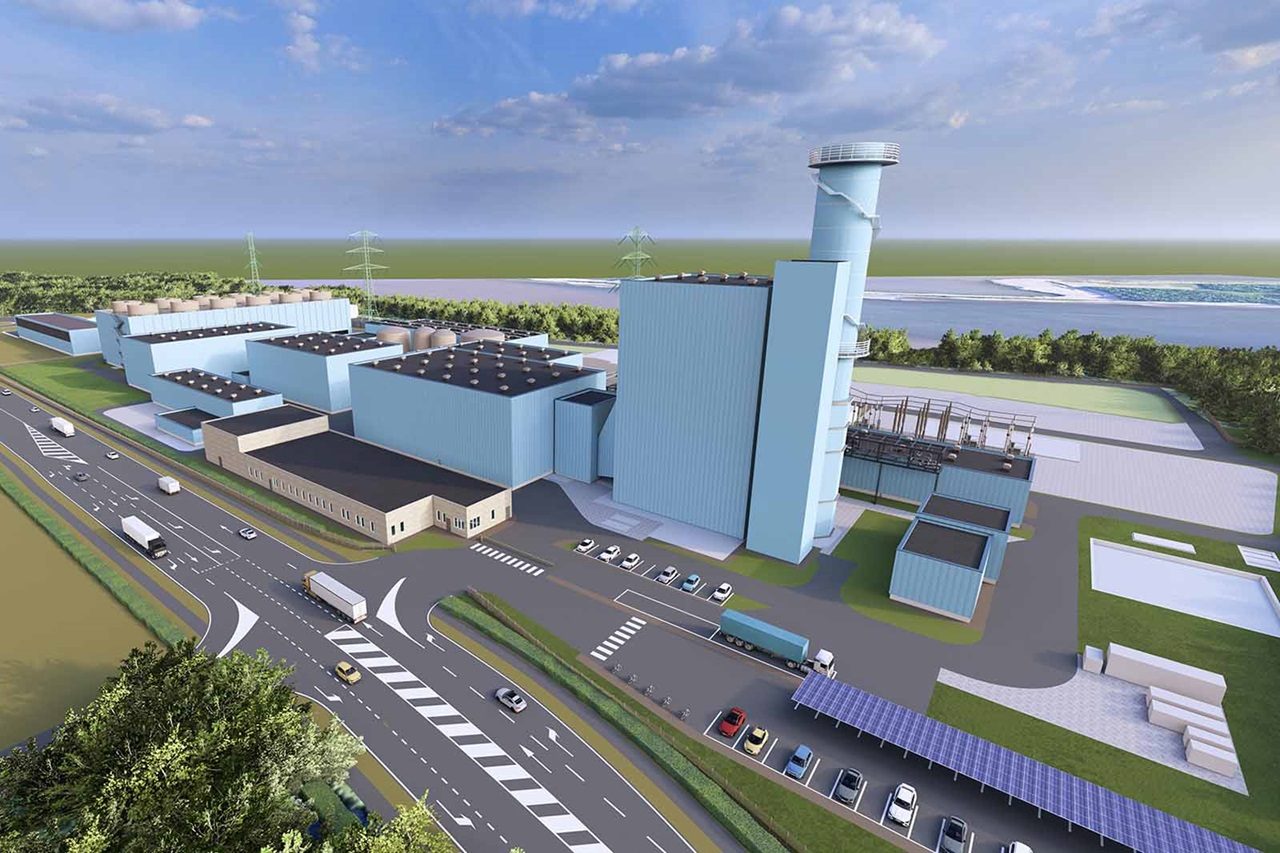
Germany's first tender for long-term capacity under its new capacity law has gone entirely to gas. The Bundesnetzagentur on November 3, 2026 awarded 11 bids totalling about 5,160 MW of "reduced" capacity, at a volume-weighted average of €155,296 per reduced megawatt per year against a cap of €244,000 (Bundesnetzagentur release, in German). RWE and LEAG hold 10 of the 11 awards, and each of the three winning companies describes its plants as gas-fired and ready for hydrogen.
Reduced capacity is the law's discount for reliability: for gas plants, 85% of installed capacity counts. At the average award value, 15 years of payments on the awarded volume come to about €12 billion, by our arithmetic, before the price-spike payback described below. The tender drew 41 bids for about 11,958 reduced MW, seven of which were excluded, and overshot its 4,500 MW target because the bid that first crossed it was still accepted.
What hydrogen-ready means in the law
The bar is convertibility, not hydrogen. The Strom-Versorgungssicherheits- und Kapazitätengesetz (StromVKG), enacted on July 21, 2026, says a plant bidding for a 15-year contract that burns natural gas as its main fuel must be "prepared" for hydrogen: planned and built so that operation on 100% hydrogen can be reached by changing components or the way the plant is run (§ 17). Each bid has to include a concept for that conversion, and a bid without one is excluded (§ 49).
The only date attached is 2045. A 15-year winner commits to run the plant climate-neutral "spätestens ab dem Jahr 2045" (from 2045 at the latest, § 73). The law sets no date for switching to hydrogen and does not say how climate neutrality is to be reached. Payments start on November 1, 2031, so the 2045 duty arrives with about 22 months of the contract left, by our arithmetic.
The owners talk about hydrogen the same way, as a later step. RWE calls its three plants "hydrogen-compatible". LEAG (in German) says it will make its new blocks fit for hydrogen "perspektivisch", in due course. Stadtwerke Karlsruhe (in German) says its plant will be designed from the start for a later switch to hydrogen and run on natural gas first. None of the three gives a date for burning hydrogen.
Who won, and who did not
RWE won three combined-cycle plants in North Rhine-Westphalia: Voerde at about 730 reduced MW, Weisweiler and Werne at about 700 each, around 2,100 in total. It says construction of the first should begin "in just a few weeks", because it commissioned approval planning and secured manufacturing capacity for key components before the auction.
LEAG won seven awards for gas blocks with 3,680 MW of capacity (2,998 reduced MW). Four 560 MW blocks are planned at Jänschwalde in Brandenburg and two at Boxberg in Saxony, under what LEAG calls its FuelSwitch concept of building at existing plant sites and reusing grid connections, some buildings and certain components. It credits that reuse for award values well below the cap. The seventh is a 320 MW plant at Leipheim in Bavaria, next to a gas turbine plant LEAG has run there since 2023. LEAG puts its investment across all of them at about €1.5 billion to €2 billion.
The 11th award is a combined heat and power plant for Stadtwerke Karlsruhe: 12 gas engine modules with 54 MW of electrical and 54 MW of thermal output for the city's district heating, with construction planned for 2027 and operation for late 2029.
Storage won none of it. The long-term tender only admits plants that can feed 80% of their installed capacity into the grid for at least 10 consecutive hours (§ 12). Klaus Müller, the agency's president, still credited an "intensive competition between the different technologies, that is, power plants and storage" (our translation) for the comparatively low prices. The agency has not published how many bids came from storage, pv magazine reports (in German). Italy, which does credit batteries in its capacity market, is meanwhile cutting how much each new battery counts.
Cheap capacity, dearer energy?
The low average price comes partly from reusing old plants. Analysts at Enervis, quoted by pv magazine, put coal-to-gas conversions, including LEAG's Jänschwalde and Boxberg, at about 53% of the awarded capacity, new combined-cycle plants at 41% and gas engines at 1%. Conversions cost less to build, Enervis says, but are likely less efficient than new combined-cycle plants, which can exceed 60%. If they set prices, the resulting wholesale costs "could fully offset or even exceed the savings on capacity payments", in the analysts' words (our translation).
The contracts also cap the upside. Winners owe a price-spike payment for every quarter hour in which the spot price exceeds their plant's strike price, whether or not the plant runs (§ 81). Enervis says bidders had to price that in, and calls the average award "very low" even allowing for the conversions.
Winners now have to put money down. The awards count as notified on November 10, 2026, and each must post a completion security of 1.5 times their bid value per reduced megawatt by December 8, 2026 (award notice, in German).
Outlook
The second bid date is December 29, 2026 (§ 4), and the agency will announce it on November 10. Its volume shrinks by the first round's overshoot, which leaves about 3,840 reduced MW, by our arithmetic. Enervis expects heavy competition again from the projects that lost, and says further conversion projects could add to it. It also says about 93% of the remaining volume would have to go to southern sites to reach the two-thirds southern share the scheme aims for, which a bonus for southern bids favors but does not guarantee.
The climate-neutrality half of the bargain is tested in 2045, not 2031. Until then, whether these plants ever burn hydrogen rests on the conversion concepts filed with the bids, which are not part of the published award notice.
⚠ The Outlook's closing paragraph extrapolates from the StromVKG's 2045 climate-neutrality duty and conversion-concept requirement; its round-two expectations are Enervis's, as reported by pv magazine. No figures are invented.
Sources
Primary
- StromVKG - Ergebnisse der ersten Ausschreibung für Langzeitkapazitäten · Bundesnetzagentur
Supporting
- Strom-Versorgungssicherheits- und Kapazitätengesetz (StromVKG) · Bundesministerium der Justiz / gesetze-im-internet.de
- LEAG erhält Zuschläge für sieben Zukunftskraftwerke in der Lausitz und in Bayern · LEAG
- StromVKG-Auktion: Stadtwerke Karlsruhe erhalten Zuschlag für Bau eines neuen Kraftwerks · Stadtwerke Karlsruhe
- Der durchschnittliche Zuschlagswert für Langzeitkapazitäten bleibt mit rund 155.000 Euro deutlich unter Höchstwert · pv magazine Deutschland
- Billions to be invested in security of supply: Following success at auction, RWE set to build three new hydrogen-compatible power stations in Germany · RWE AG
- Ausschreibung für Langzeitkapazitäten, 1. Gebotstermin 8. September 2026: Bekanntgabe der Zuschläge · Bundesnetzagentur
Copies of cited sources are retained where available. If a link no longer resolves, request a copy at contact@theduckcurve.com.