 The Duck Curve
Energinet uses Kriegers Flak turbines in a black start test on Zealand
Voltage from Germany came first; then 19 offshore turbines with 149 MW of production potential joined an isolated test grid on November 14, in what Energinet calls probably the world's first test of its kind.
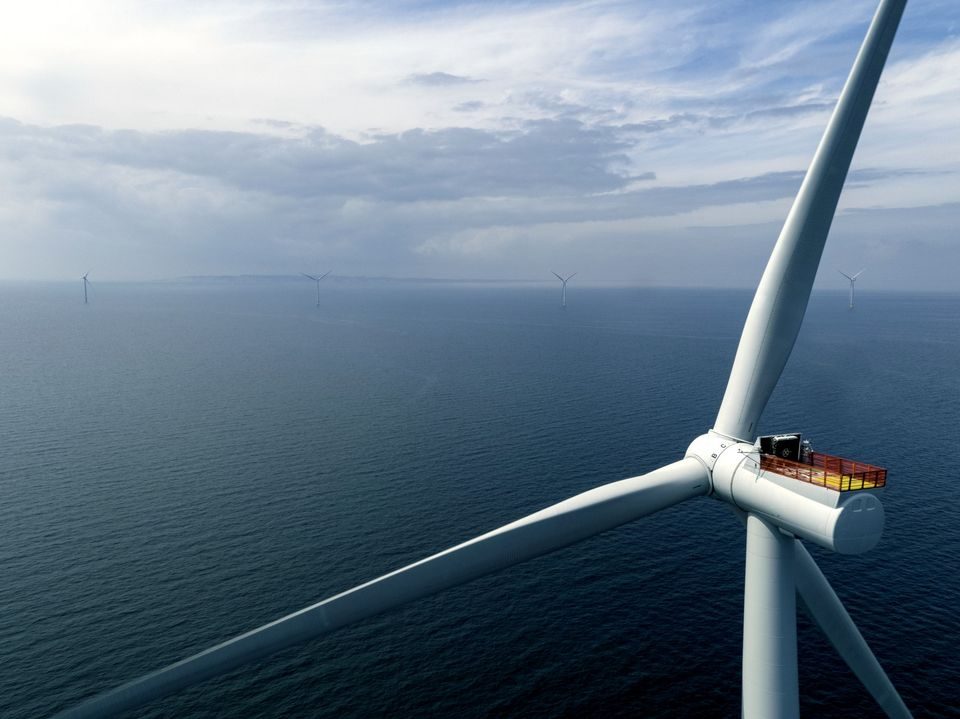
Danish grid operator Energinet restarted an isolated section of eastern Denmark's transmission grid on Saturday, November 14, 2026, in a simulated blackout on Zealand, first with voltage from Germany and then with 19 turbines from the Kriegers Flak offshore wind farm, which together have a production potential of 149 MW. Energinet announced the result on November 25 and says the test is probably the first of its kind in the world (Energinet).
The order of events matters. The turbines did not restart a dead network on their own: a special converter station in Germany first put voltage on a bounded part of the eastern Danish transmission grid, and only then were turbines from Kriegers Flak B connected to the test grid, one at a time. The first six came on within 16 minutes and delivered the 45 MW the test called for; more followed until 19 were taking part, Energinet says. The test grid was kept separate from the rest of the power system, and the test ended as planned at 14:30, when the grid went back to normal operation. Energinet ran it with Vattenfall, 50Hertz and EnBW.
The reason for trying is that the usual restart crew is leaving. A grid cannot be switched back on all at once after a large outage; it is rebuilt step by step, and power stations have traditionally been the plants that ease it back up in a controlled way. With fewer of them and more output that moves with the sun and the wind, Energinet says, getting back to normal operation is more complicated. Denmark's last blackout, in 2003, left eastern Denmark without power for several hours, and on April 28, 2025, large parts of Spain and Portugal were without power for many hours, the release recalls.
"We must both work to avoid major power outages and be ready to bring power back if they happen anyway. With this test, we have shown that both the connection to Germany and renewable energy from offshore wind can play an important role," Klaus Winther, deputy director and head of system operations at Energinet, said in the Danish release.
A first, carefully worded
Energinet's claim comes with its own qualifier. As far as Energinet knows, it says, this is the first time a transmission system operator has tested an offshore wind farm as an active production unit in a real test of restoring the system.
The Kriegers Flak interconnector already has a first of its own. In December 2020, 50Hertz announced that Energinet had supplied the 380 kV voltage, through the Kriegers Flak Combined Grid Solution and new converter systems at the Bentwisch substation near Rostock, to restart the coal-fired Rostock power plant. "For the first time, a land and sea cable connection between two countries as well as offshore wind power were used in real conditions to restart a power plant," 50Hertz said then (50Hertz). The 2020 test sent Danish voltage south to restart a coal plant; this one sent German voltage north to put part of eastern Denmark's grid back under voltage, then brought wind turbines onto it. 50Hertz's release did not say what part offshore wind played in its restart, which is why Energinet's narrower wording matters.
The German end of the link set the order of events: no turbine joined the test grid until voltage from Germany was on it. Energinet's release describes that first step only as a special converter station in Germany; by our reading, it is the back-to-back converter at the Bentwisch substation, since the test's stated purpose was to see how the Kriegers Flak connection could be used to restore supply in eastern Denmark. That converter "synchronises and connects the two asynchronous power systems of Denmark and Germany," 50Hertz's chief technical officer, Frank Golletz, said in 2020, when 50Hertz described the Combined Grid Solution as a hybrid system with a capacity of 400 MW that moves electricity between the two countries, with the Baltic 1 and Baltic 2 wind farms integrated into it.
Restart capability is something grid operators rehearse rather than assume. 50Hertz noted in 2020 that start-up attempts are part of transmission operators' restoration plans and have to be tested regularly, and that the job has traditionally fallen to storage or gas-fired stations because they need no external power to start. Kriegers Flak's turbines still needed Germany to go first. What the test adds is that, once the voltage was there, offshore wind could add power to the rebuilt grid turbine by turbine.
Sources
Primary
Supporting
- 'Black start' with wind power: Rostock power plant successfully started up via cable Germany - Denmark · 50Hertz Transmission
Copies of cited sources are retained where available. If a link no longer resolves, request a copy at contact@theduckcurve.com.