 The Duck Curve
Michigan regulators approve 360 MW of DTE solar at $76 to $96 per MWh
Only the cheapest of the three comes in under the $79.20 cost bar in DTE's 2023 plan settlement; DTE argued the package against a second test, an independent monitor's $98.4 market average.
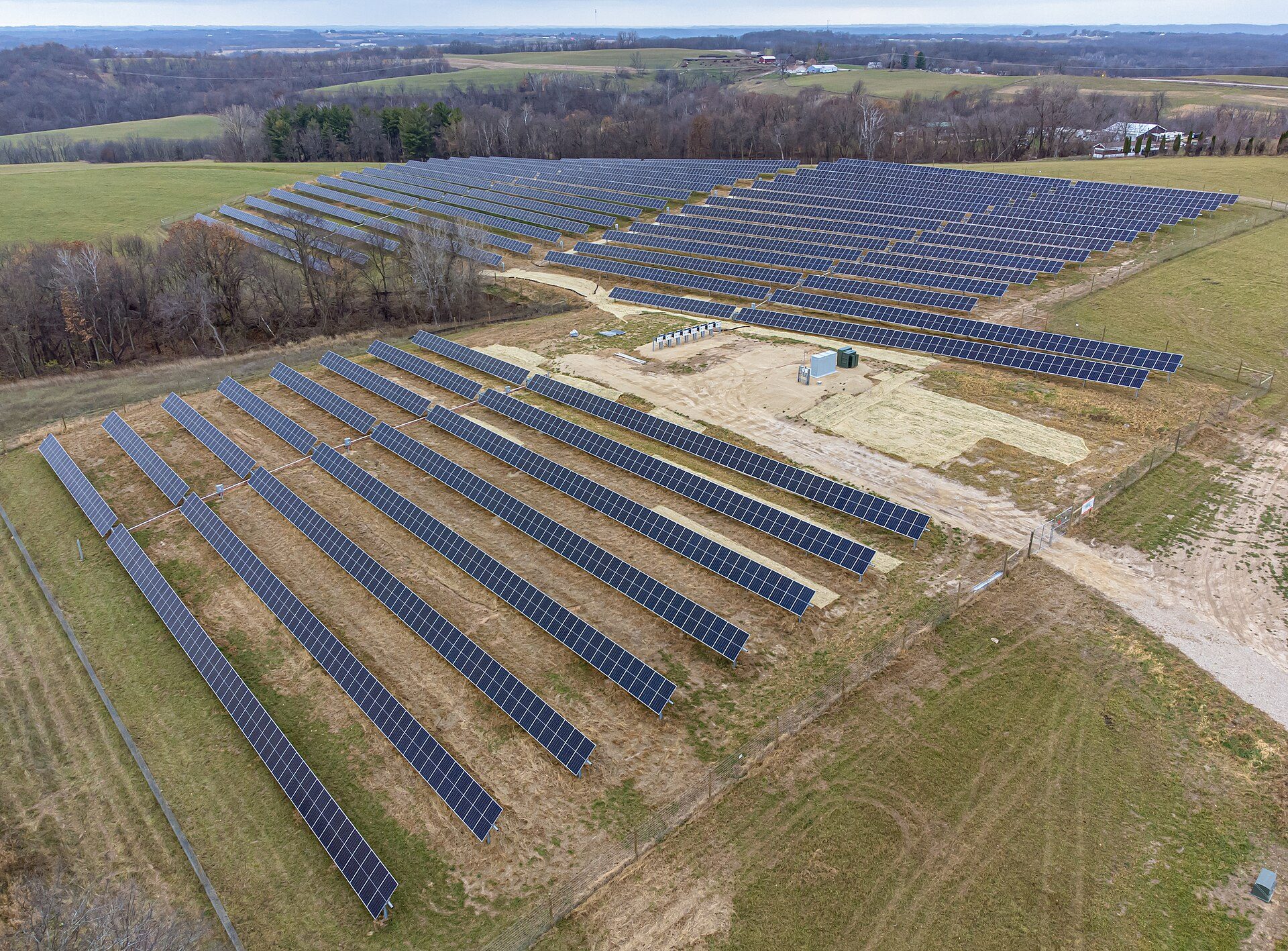
The Michigan Public Service Commission on October 15, 2026 approved 360 MW of new solar for DTE Electric: a 20-year power purchase agreement for the 125 MW Blazing Star project in Allegan County, and the supply and construction contracts for two projects DTE will own, the 50 MW Keystone in Iosco County and the 185 MW Peatville in Sanilac County (order). DTE puts their expected levelized costs of energy at $96, $83 and $76 per MWh respectively, and the blend at $81.
The approval came ex parte, without a contested hearing, under the procurement route DTE's 2023 integrated resource plan settlement set up. DTE filed on July 31 and asked for an order by October 1, warning of volatile solar equipment and construction pricing and noting that the Blazing Star contract terminates automatically if not approved by November 5. The Commission ruled two weeks after the date DTE asked for and three weeks before the contract would have walked. The 360 MW comes from a solicitation for at least 1,350 MW that DTE issued in 2025, toward the 2023 plan's aim of adding 15,000 MW of solar and wind, per the Commission's announcement.
The price test
The settlement gives a project two ways to count as consistent with the plan: a price at or below the fair market value the independent monitor finds in the bids, or a price at or below 150% of the $52.80 per MWh solar cost the plan's model used, which works out to $79.20. Peatville, at $76, is the only one of the three under $79.20. The $81 blend is above it too, though one paragraph of DTE's application calls it "below 150%" of $52.80; DTE's sworn affidavit rests the case on the market-value prong.
That prong is generous in this solicitation. Guidehouse, the solicitation's independent monitor, put the fair market value of the bids at $98.4 per MWh (application). The Commission found the PPA and projects were selected consistently with the settlement and said it will review the projects' final costs for reasonableness and prudence in a future rate case or reconciliation. By our arithmetic, even Peatville comes in about 44% above the solar cost the 2023 plan was modeled on.
Two things are baked into Blazing Star's $96. One is the financial compensation mechanism, a Michigan statutory incentive the utility earns on contract payments to a non-affiliated seller, calculated at DTE's pre-tax cost of capital of 8.80%; DTE estimates it at $7.67 per MWh in the first year and about $35 million over the 20-year term. The utility is, in a small way, paid for buying. The other is a trade clause: the contract price can rise after a "Trade Measure Event" up to a cap, and the $96 assumes the cap. Blazing Star Solar LLC is an indirect subsidiary of Apex Clean Energy Holdings.
Equipment, credits and schedule
The two DTE-owned projects buy modules from New East Solar Energy (America), with Peatville adding Boviet Solar USA and Trina Solar (U.S.), and use Barton Malow for engineering, procurement and construction. DTE says supplier-identified tariff impacts are already in their costs, and any tariff costs above those levels go to its renewable cost reconciliation, where the Commission can test them. The application predates the October 14 USITC vote that cleared the way for duty orders on cells and modules from India, Indonesia and Laos.
Both owned projects are eligible for the 30% investment tax credit and expected to qualify for a 10% energy-community bonus; DTE puts the nominal credit at about $42 million for Keystone and $136 million for Peatville, and says it safe-harbored equipment for them in 2025. DTE expects both in service no later than the fourth quarter of 2028. Blazing Star slipped to the second quarter of 2029 after permitting delays, past the fourth-quarter-2028 date the solicitation asked for.
The solicitation itself was a solar affair. Guidehouse reports 45 bids from eight bidders covering 28 unique solar projects of about 2,700 MW, and no wind bids at all, in a request for renewable energy.
What is left of the 1,350 MW
DTE told the Commission it intends to file for more projects to reach the target, and the next one is already in. On October 9 it applied for approval of a 30-year agreement to buy from the 250 MW Headland Solar project in Livingston County, whose seller is an indirect subsidiary of DESRI Holdings, at an expected $96 per MWh with service expected in the third quarter of 2029 (application). By our arithmetic, Headland would bring the approved and pending total to 610 MW, still under half the ask.
The docket has run this way before. On March 27, 2026 the Commission approved, by the same ex parte route, contracts for 1,000 MW of battery storage DTE selected in its 2025 storage solicitation, including the 450 MW Big Mitten tolling agreement in Huron County (order). Guidehouse was the independent monitor there too.
Outlook
Headland arrives alone, at $96, with no cheaper Peatville to blend it down, so on the settlement's terms it can lean only on the market-value prong, which DTE's October 9 application does by citing a $98 fair market value. If it is approved, two of the four projects DTE has filed from this solicitation will have cleared at $96, well above the plan's $79.20 bar. With every price recited in this order above the 2023 model's $52.80, the rate-case and reconciliation reviews the Commission reserved look like the likelier place for any cost argument to surface.
⚠ The Outlook extrapolates from the October 15, 2026 order, DTE's July 31 and October 9, 2026 applications in Case No. U-21193 and the settlement price tests they describe; it does not predict the Commission's ruling on the Headland application.
Sources
Primary
- Order approving DTE Electric's Blazing Star PPA and Keystone and Peatville solar projects, Case No. U-21193 · Michigan Public Service Commission
Supporting
- Order approving DTE Electric's Big Mitten tolling agreement and Fermi and Monroe I storage projects, Case No. U-21193 · Michigan Public Service Commission
- DTE Electric ex parte application for approval of the Blazing Star PPA and Keystone and Peatville projects (public version), Case No. U-21193 · DTE Electric Company
- DTE Electric ex parte application for approval of the Headland Solar PPA (public version), Case No. U-21193 · DTE Electric Company
- MPSC approves continued safety investments for Consumers' natural gas system (October 15, 2026 meeting release, includes DTE solar item) · Michigan Public Service Commission
Copies of cited sources are retained where available. If a link no longer resolves, request a copy at contact@theduckcurve.com.