 The Duck Curve
Repsol approves €400 million, 150 MW green hydrogen plant in Tarragona
Repsol's third large Spanish electrolyser carries a grant of up to €104 million whose June 2025 award set an 18-month deadline for a final investment decision.
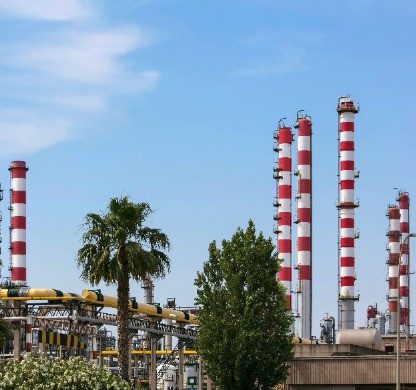
Repsol's board has approved a 150 MW electrolyser at the company's industrial complex in Tarragona, Catalonia, an investment of approximately €400 million, Repsol announced on November 12, 2026. Enagas Renovable, owned 80% by Hy24 and 20% by Enagas, holds a 25% stake. Repsol says the plant will be able to produce more than 22,000 metric tons of renewable hydrogen a year, mainly for its Ecoplanta and refinery to make renewable methanol and other low-carbon products, and that it has been selected to receive up to €104 million from Spain's Hydrogen Valleys program.
Tarragona is the third and largest of Repsol's big Spanish electrolysers, and it brings the three to a combined 350 MW. Repsol announced approval of a 100 MW unit at Cartagena on September 30, 2025, also with Enagas Renovable at 25%, for more than €300 million and expected operation in 2029. A second 100 MW unit at the Petronor refinery near Bilbao followed on January 26, 2026, at €292 million for commissioning in 2029. Sunfire is supplying both 100 MW plants, each as ten 10 MW pressurized alkaline modules.
In January, Repsol said the Petronor plant "will soon be joined by a large electrolyzer in Tarragona, with a capacity of 150 MW." The board approval came about nine and a half months later. The start date remains open: the November release gives no start-up year and names no electrolyser supplier, while Repsol's T-Hynet project page, updated as of August 2026, describes a 150 MW alkaline electrolyser, says the project is in the engineering phase, and states that "start-up is planned from 2028."
The hydrogen mostly stays inside the fence. Repsol will use it primarily for renewable methanol and other low-carbon products, with the Ecoplanta, which the January release describes as a future plant to produce renewable methanol from municipal waste, among the users. The company also leaves open supplying the natural gas network and the Spanish Hydrogen Backbone in the future. Repsol says its complexes can already produce around 360,000 tons of hydrogen a year, 60% of Spain's production; by our arithmetic, Tarragona's capacity of 22,000-plus tonnes would match about 6% of that.
Maribel Rodríguez, Repsol's director of renewable hydrogen, said the electrolyser and the Ecoplanta "represent an integrated industrial platform that places Tarragona at the heart of our transformation." Repsol expects the plant to avoid up to 250,000 tons of CO₂ a year.
The grant came with a clock
Spain's Institute for the Diversification and Saving of Energy (IDAE) awarded the project, listed as Tarragona Hydrogen Network (T-HYNET) at La Pobla de Mafumet, €104,192,000 against eligible costs of €314.9 million in its definitive resolution signed on June 12, 2025. The award attached control milestones counted from the resolution's publication: an integrated environmental authorization within 16 months, a final investment decision within 18 months, electrolysers on site within 30 months and the project finished within 36. By our arithmetic, the investment-decision milestone falls in December 2026, a month after the board's approval, and the 36-month limit in mid-2028, consistent with the project page's start-up date. A beneficiary that misses an intermediate milestone must justify it, with corrective measures and a reprogramming consistent with finishing by the date set in the resolution.
The plant's annual output depends on how many hours it runs. IDAE's resolution expects 13,764 tonnes a year at an estimated 5,610 equivalent operating hours, both averaged over the first ten years, from 140.80 MWe measured as direct current at the stack, excluding auxiliary systems and balance of plant. Repsol's release gives a capacity of more than 22,000 tonnes a year and does not say how its 150 MW is measured. Its project page puts output at up to 2.7 tonnes an hour. By our arithmetic, that rate over the resolution's 5,610 hours comes to about 15,150 tonnes, and 22,000 tonnes at that rate takes about 8,150 hours, roughly 93% of the year, so most of the gap is the assumed running time. The release does not explain the difference, and it does not say where the electricity will come from.
The subsidy is also a smaller share than at Repsol's first two plants. Cartagena, recognized as an Important Project of Common European Interest, is to receive €155 million through IDAE against more than €300 million of investment; Petronor, also an IPCEI, €160 million of NextGenerationEU funds against €292 million. Tarragona's up to €104 million against about €400 million is, by our arithmetic, roughly a quarter. The largest of the three carries the smallest grant.
One of seven valleys
Tarragona's money comes from the first call of the Hydrogen Valleys program. The Ministry for the Ecological Transition (MITECO) announced on June 13, 2025 that the call awarded €1.223 billion of NextGenerationEU funds to seven projects in Aragón, Andalucía, Castilla y León, Catalonia and Galicia, with 2,292.8 MW of electrolysis across 12 installations, mobilizing €5.821 billion of investment. The call set a 100 MW minimum per project and required purchase commitments from industrial offtakers for at least 60% of output. The ministry ties the program to Spain's revised national energy and climate plan, which foresees 12 GW of electrolysis by 2030.
Awards do not always become plants. In the Netherlands, four of the seven electrolyser projects subsidised in 2022 have stopped. Tarragona also matches the size of the refinery plant at ITM Power's Hydropulse, which signed only heads of terms in October 2026 and targets a final investment decision in 2027. Repsol's version has a board vote, a grant and its own refinery as the buyer.
Sources
Primary
Supporting
- Resolución definitiva, primera convocatoria Valles de H2 (PR-H2CLUSTER-2024-000038, T-HYNET) · IDAE
- El MITECO adjudica 1.223 millones a siete proyectos de hidrógeno verde · MITECO
- Repsol to build its first large-scale renewable hydrogen plant in Cartagena · Repsol
- Repsol installs its second 100-MW electrolyzer at Petronor · Repsol
- Sunfire Secures 200 MW Electrolyzer Orders in Spain · Sunfire
- T-Hynet, the largest electrolyzer project in Spain · Repsol
Copies of cited sources are retained where available. If a link no longer resolves, request a copy at contact@theduckcurve.com.