 The Duck Curve
Georgia Power opens 530 MW McGrau Ford battery, running since August
What Georgia Power calls the state's largest battery is two 265 MW units with different durations, and EIA lists both as operating since August 2026, ahead of the October and September dates the utility projected in 2025.
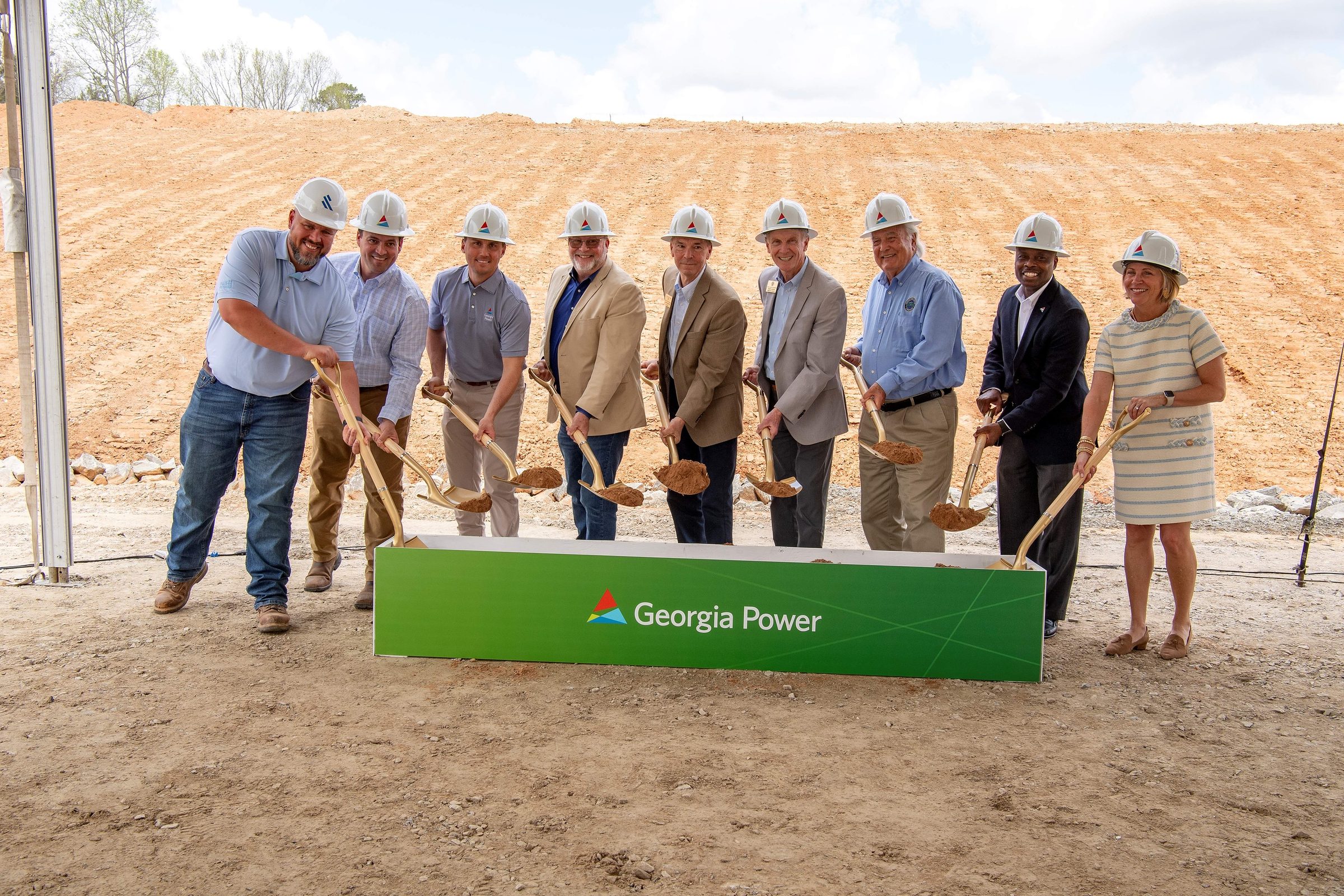
Georgia Power cut the ribbon on November 6, 2026 on its McGrau Ford Battery Facility near Ball Ground in Cherokee County, a 530 MW installation of Tesla batteries on 40 acres that the utility describes as Georgia's largest battery energy storage system, CBS News Atlanta reported. The ceremony came after the fact: the US Energy Information Administration's monthly generator inventory lists both of the site's 265 MW units as operating since August 2026.
The two units are not twins. EIA lists one with 530 MWh of storage and the other with 1,060 MWh, so by our arithmetic one can run at full output for two hours and the other for four, and the site holds 1,590 MWh in all. That is the power-versus-energy distinction made physical in one fenced lot. The split follows the paperwork. Phase I was approved in Georgia Power's 2022 Integrated Resource Plan, and Phase II came out of the 2023 IRP Update, whose batteries Georgia Power said in August 2024 would each be four-hour systems. EIA's inventory does not label its units by phase, but only the 1,060 MWh unit matches that description.
The batteries arrived early. When Georgia Power announced on May 7, 2025 that construction was underway, it projected commercial operation for Phase I in October 2026 and Phase II in September 2026, with Burns & McDonnell engineering and building both. By September 15, 2026 the utility's release on its Robins battery already counted the job done, saying it had "completed battery storage facilities in Cherokee and Lowndes counties totaling 579.5 MW."
The two phases plug into the grid through one connection. Rick Anderson, Georgia Power's senior vice president and senior production officer, said at the ceremony that they use a single transmission infrastructure to "minimize costs," the Cherokee Tribune-Ledger reported. That was the plan in 2024, when Georgia Power said Phase I's design let it cost-effectively expand the project-level substation and generation tie line for Phase II rather than build a new substation. Anderson also described the job as storing cheap nighttime energy to discharge when power costs more. "You might have at night where costs are really low. You have excess capacity," he told CBS, adding that this is not a promise of an immediate reduction in monthly bills.
Cherokee County gets a tax base out of it. County Commissioner Will Cagle said construction created approximately 200 jobs and that the facility "will generate approximately $4.7 million every year for Cherokee County District 1," the Tribune-Ledger reported.
More batteries on the way
McGrau Ford is the largest of four batteries, 765 MW together, that Georgia Power had under construction by May 2025. The others are the 128 MW Robins battery beside the solar facility at Robins Air Force Base, a 49.5 MW battery beside the solar facility at Moody Air Force Base, and a 57.5 MW battery at the retired coal-fired Plant Hammond in Floyd County. Robins was in commercial operation by September 15, when the same release said Hammond was nearing completion; Georgia Power representatives told the Tribune-Ledger at the McGrau Ford ceremony that all four sites are now open.
The next round is bigger than all four combined. The Georgia Public Service Commission has approved nine more battery facilities across eight sites, adding more than 3,000 MW, according to the Robins release, including locations at Plants Bowen, Hammond, McIntosh, Wansley and Yates and stand-alone sites in Hall and McDuffie counties. Two solar facilities paired with batteries, 350 MW combined, are approved for Laurens and Mitchell counties. Anderson told CBS the utility expects to have 12 battery sites totaling more than 4,000 MW by 2030.
For these four batteries the path ran through the PSC's resource plan: the 2025 release says they were authorized through the IRP process, and McGrau Ford uses company-owned land. In restructured New Jersey, a utility owning a battery at all is the fight. Atlantic City Electric's proposed battery of up to 500 MW faces a motion to dismiss arguing that the state's 1999 restructuring law forbids rate-regulated utility ownership of generation (our coverage).
Sources
Primary
- EIA-860M Preliminary Monthly Electric Generator Inventory (September 2026 data, released October 23, 2026) · U.S. Energy Information Administration
Supporting
- Georgia Power determines locations for 500 MW of new battery energy storage systems approved in 2023 IRP Update · Georgia Power
- Construction now underway on 765 MW of new battery energy storage systems across Georgia · Georgia Power
- Georgia Power's Robins Battery Storage achieves commercial operation · Georgia Power
- Georgia's largest battery storage facility unveiled in Ball Ground to help with peak demands · CBS News Atlanta
- Georgia Power opens McGrau Ford battery storage facility · Cherokee Tribune-Ledger
Copies of cited sources are retained where available. If a link no longer resolves, request a copy at contact@theduckcurve.com.