 The Duck Curve
BETA flies over 1,300 nautical miles on North Carolina medical test routes
Since September 17, 2026 BETA's ALIA CTOL has flown between Raleigh Executive Jetport, Pitt-Greenville and Dare County Regional Airport with simulated healthcare-cargo deliveries under the DOT and FAA eVTOL Integration Pilot Program.
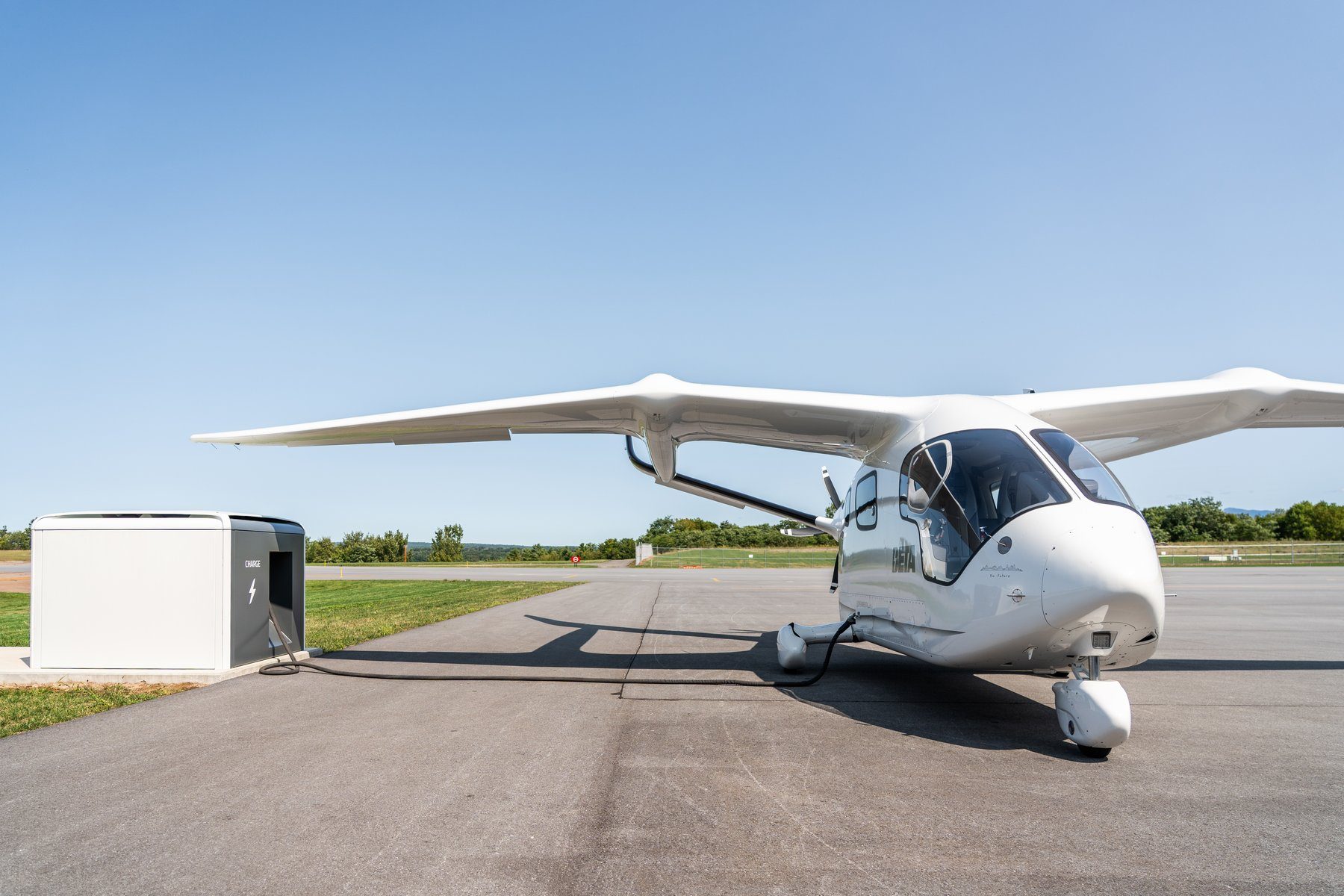
BETA Technologies has begun flying its all-electric ALIA CTOL on medical-logistics test routes in North Carolina under the US Department of Transportation and FAA eVTOL Integration Pilot Program (eIPP), the company announced on September 23, 2026. Since September 17, per the release, the aircraft has been conducting operations that include a flyover of the Wright Brothers National Memorial and simulated deliveries of healthcare cargo, including a deployable medical field tent and supplies, to rural medical access points. The release puts the campaign at more than 1,300 nautical miles, focused on future healthcare missions connecting the Research Triangle, including routes between Raleigh Executive Jetport and Pitt-Greenville Airport, with communities such as those served by Dare County Regional Airport.
The state program is eLIFT-NC, which NCDOT's March 2026 release expands as Electric Logistics and Integrated Flight Testing. BETA's release names NCDOT, Metro Aviation and healthcare partners including ECU Health and WakeMed as the campaign's partners. A US Department of Transportation statement dated September 23 says that in the week before it, BETA's electric ALIA aircraft "completed multiple test flights between Raleigh Executive Jetport, Pitt-Greenville Airport and MQI", the code for Dare County Regional Airport, while Joby Aviation's remotely piloted J208 flew from Dare County to Raleigh-Durham International Airport. Over the week to September 23, BETA founder and chief executive Kyle Clark said in that statement, "our aircraft flew more than 16 medical and disaster response missions between Raleigh Executive Jetport, Pitt-Greenville and Dare County Regional Airport." Metro Aviation, Clark added, "has flown every mission with us." Metro's vice president Todd Stanberry, in BETA's release: "The goal is to lower costs, expand access and safely create new options for moving supplies, clinicians and, eventually, patients."
ECU Health's post of September 24 says the health system joined Governor Josh Stein and representatives of the FAA, NCDOT, BETA, Joby Aviation, Metro Aviation and other state healthcare organizations for a kick-off event on September 23 at Raleigh Executive Jetport. The governor's office described the occasion as celebrating "North Carolina's first electric air taxi flights" under the eIPP, said Stein and NCDOT Secretary Daniel Johnson "had the opportunity to ride in the aircraft during the event" without naming whose aircraft, and said the first eLIFT-NC flights took place in September 2026, with Joby remotely piloting and BETA flying electric between the Triangle and the Outer Banks. Per the same release, those flights sit in phase one of eLIFT-NC, in which NCDOT will establish flight routes, expand to additional airport pairs, build safety cases, engage local communities and gather data to inform future operations.
ECU Health says it serves 1.4 million patients across 29 primarily rural counties in eastern North Carolina and sits on the initiative's Healthcare Advisory Committee, and Dr. Stuart Ginn, identified in BETA's release as medical director of WakeMed Innovations and chair of the eLIFT-NC Health Advisory Subcommittee, said accessible vertical flight offers an opportunity to treat aviation as part of the healthcare infrastructure.
Eight projects, one pilot program
The FAA's March 9, 2026 release announced eight proposals selected from more than 30, evaluated by a technical review team from DOT and the FAA. It said the eight projects span 26 states, that the public would start to see operations by summer 2026, and that data from the projects will be used by the FAA to develop new regulations. North Carolina's entry, in the FAA's description, is "piloted medical and regional operations across the state while also developing an autonomous flight operation extending into Virginia", with BETA, Joby and "Other" listed as partners. NCDOT's March release laid out a phased plan: initial training and baseline operations, expanded route development and, ultimately, hospital pad-to-pad eVTOL missions, alongside planning for charging infrastructure, vertiport development and digital systems.
BETA's March 9 release said it was selected for seven of the eight launch programs, "the most of any electric aircraft developer", with CTOL operations first and VTOL to follow. BETA's first flights under the program, announced July 10, 2026, carried manufactured organs being developed by United Therapeutics over approximately 275 nautical miles across a Virginia and Maryland corridor, per that release. The September 23 release lists Virginia, Maryland, Louisiana and Texas as states where BETA has already supported operational missions, and DOT's statement calls North Carolina the fifth location to launch under the initiative, following Texas earlier in September. The published footprint has grown: the FAA's March 9 release said the eight projects span 26 states, and DOT's September 23 statement says 28.
The aircraft doing the flying is still in certification. BETA's glossary calls it the ALIA CX300 in one entry and says in another that the CX300, its single-engine CTOL aircraft, "is undergoing FAA Part 23 type certification"; the August 12, 2026 second-quarter release says the company closed the CX300's Requirements Definition phase and received FAA acceptance of the aircraft's complete set of compliance requirements. What the aircraft fly under meanwhile is in BETA's annual report for 2025, filed March 9, 2026: the company says it has secured FAA Special Airworthiness Certificates to support continued flight testing and market survey operations and, in a risk factor, that it has received them for certain ALIA CTOL aircraft. None of the documents cited here says which certificate the North Carolina aircraft flew under. Heart Aerospace's X1 demonstrator, whose first flight on August 12, 2026 The Duck Curve covered, flew under an FAA Special Airworthiness Certificate in the Experimental Category.
The chargers were there first
The release says the eIPP operations will use BETA's Charge Cube at Raleigh Executive Jetport, installed in 2024, and that more than 15 additional charging sites are in development across the state. BETA's boilerplate in the same release counts more than 130 charging sites across the United States and internationally and more than 200,000 nautical miles flown by its ALIA family; in the second-quarter release the company said it had grown the network to 138 charging sites.
On July 16, 2026 Archer Aviation, BETA and Macquarie Capital announced America's Consortium for Electric Skyways (ACES), described in the release as a plan to electrify up to 250 air taxi sites across the United States, with BETA supplying chargers built on the Combined Charging Standard and the consortium, as eIPP participants, prioritizing markets where Archer and BETA plan to operate.
The release's headline puts the 250-plus sites "by 2030"; its body says "the coming decade". At major airports, per the release, the same chargers would be available to airport ground support vehicles, the equipment class an FAA grant is paying to build chargers for at Ontario International Airport. NCDOT's other charging portfolio is on the road: on September 11, 2026 it awarded $14.4 million in NEVI funds for 14 corridor EV charging sites, awards it calls conditional until contracts are signed.
Outlook
Per DOT's September 23 statement, NCDOT and other eIPP participants are planning additional test flights through the rest of 2026. NCDOT's March plan ends at hospital pad-to-pad eVTOL missions and BETA's March 9 release set out CTOL operations first with VTOL to follow, so a VTOL mission in the state, or a delivery that is not simulated, is the next step to watch.
⚠ The Outlook extrapolates from DOT's September 23, 2026 statement that participants plan further test flights this year, the phase plan in NCDOT's March 2026 release, and BETA's March 9 and September 23, 2026 releases.
Sources
Primary
- BETA Launches North Carolina eIPP Operations to Build a Scalable Model for Rural Healthcare Access · BETA Technologies via Business Wire
Supporting
- BETA Technologies, Inc. Form 10-K for the fiscal year ended December 31, 2025 · BETA Technologies via SEC EDGAR
- THE FUTURE OF AVIATION IS HERE: Trump's Transportation Secretary Sean P. Duffy and FAA Unveil Eight Selections for Pilot Program Testing Next-Gen Aircraft in America's Skies · Federal Aviation Administration
- BETA Technologies Selected to Begin U.S. Aircraft Deliveries Through FAA's eVTOL Integration Pilot Program · BETA Technologies via Business Wire
- North Carolina Department of Transportation Selected for FAA eVTOL Pilot Program · North Carolina Department of Transportation
- BETA Technologies and Multistate Collaborative Complete First Operational Flights of the U.S. DOT and FAA's eVTOL Integration Pilot Program · BETA Technologies via Business Wire
- Archer Aviation, BETA Technologies and Macquarie Capital Launch ACES: America's Consortium for Electric Skyways to Bring Interoperable Charging to 250+ Aviation Sites Across America by 2030 · Archer Aviation, BETA Technologies and Macquarie Capital via Business Wire
- BETA Technologies, Inc. Announces Second Quarter 2026 Results · BETA Technologies via Business Wire
- Governor Stein Celebrates North Carolina's Aviation Excellence at NCDOT eLIFT-NC Showcase · Office of the Governor of North Carolina
- Trump's Transportation Secretary Sean P. Duffy Celebrates Launch of Federal eVTOL Pilot Program in North Carolina to Unlock Future of Flight · US Department of Transportation
- ECU Health partners with FAA, NCDOT on eLIFT-NC initiative · ECU Health
- Glossary · BETA Technologies
Copies of every cited source are retained. If a link no longer resolves, request a copy at contact@theduckcurve.com.